There are situations where installing over the existing siding is reasonable, and a few where the decision is shaped by asbestos or lead paint rules. This guide explains the trade-offs so you can judge any bid that proposes one or the other.
On this page
What each approach means
A tear-off removes the existing siding down to the sheathing. The crew repairs damaged wood, installs a water-resistive barrier such as house wrap, flashes the openings, and installs the new siding on a clean, flat wall.
Installing over, sometimes called re-siding over, leaves the old siding in place. The new siding is fastened through it into the structure, sometimes with furring strips or a foam underlayment to create a flat surface. The Vinyl Siding Institute's manual covers both and sets conditions for installing over an existing surface.[1]
Why tear-off is usually the better choice
The main reason is visibility. The National Park Service warns that substitute siding can hide deterioration that continues underneath.[2] Water that has been getting behind old siding for years often leaves soft sheathing under windows, at corners, and below roof lines. If new siding goes over it, the rot keeps spreading out of sight.
A tear-off also allows a continuous water-resistive barrier. Vinyl siding is a cladding, not a water barrier, and the VSI manual requires one behind it.[1] On many older Cleveland-area houses, there is no usable barrier behind the original siding. With the old layer gone, windows and doors can be flashed correctly instead of caulked over.
- Rotten wood can be found and replaced
- A continuous house wrap and proper window flashing can be installed
- The wall is flatter, so new siding looks straighter
- Trim depth stays closer to original, so windows do not look sunken
- Wall thickness does not build up at doors, windows, and fixtures
When installing over can work
Installing over existing siding can be reasonable when the old siding is flat, solidly fastened, and dry, and when there are no signs of water damage behind it. The VSI manual says loose boards should be nailed down, rotten material replaced, and new siding should not be installed over rotting wood; on uneven walls, it calls for furring to create a flat surface.[1]
The trade-off is that you are betting the wall underneath is sound. If you go this route, ask the contractor to open a few test areas, especially under windows and near roof lines, and show you what they find before the job is priced.
Asbestos siding
Some older houses have asbestos-cement siding, typically stiff shingles with a dimpled or striated face. The VSI manual notes that asbestos siding is regulated and tells installers to check with the environmental agency or building official before working with it.[1] Removing it involves specific handling and disposal requirements, which is one reason some homeowners choose to leave it in place and cover it.
If you suspect asbestos siding, have a sample tested before anyone cuts, breaks, or removes it, and ask how the contractor will handle it. Do not let anyone pressure-wash or sand it.
Lead paint on pre-1978 houses
If your house was built before 1978, the old siding or trim may have lead paint. EPA's Renovation, Repair and Painting rule requires paid work that disturbs painted surfaces on those houses to be done by a certified firm using lead-safe practices.[3] For exterior work that includes covering the ground at least 10 feet beyond the work area and avoiding open-flame burning or power sanding without HEPA dust collection.[4]
Tear-off disturbs more painted surface than installing over, so it involves more containment and cleanup. That is not a reason to avoid tear-off, but it should be priced and planned. Our lead paint guide explains the rules.
Trim and older house details
Adding a second layer of siding increases wall thickness. Without careful trim work, windows and doors can end up looking recessed and original trim details can disappear. The National Park Service recommends that substitute siding not remove or obscure trim, and Cleveland's Landmarks Commission asks the same in historic districts.[2][5] A tear-off makes it easier to keep trim proportions right.
Questions to ask on any bid
Whether a bid proposes tear-off or installing over, these questions show whether the contractor has thought about your wall.
- What is the condition of the wall behind the siding, and how do you know?
- Will there be a continuous water-resistive barrier, and how will windows and doors be flashed?
- How are rotted sheathing and trim priced if you find them?
- Is there any asbestos or pre-1978 painted siding, and how will it be handled?
- How will trim depth be kept consistent around windows and doors?
Real Buckeye projects
Work we have finished on homes like this
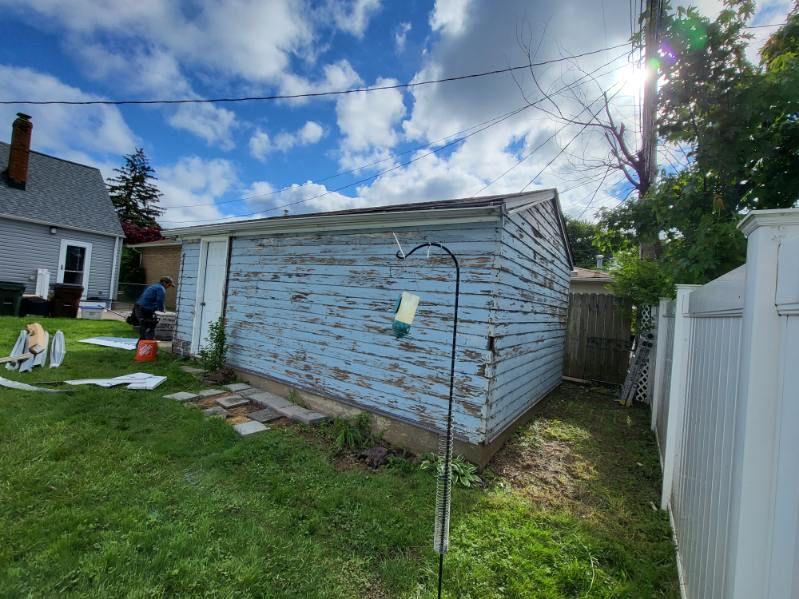
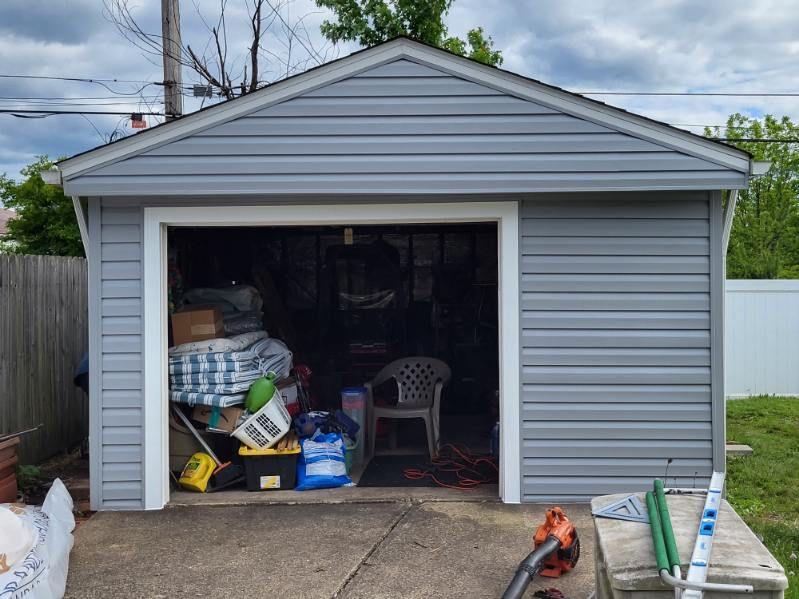
Vinyl Siding
Garage Siding Transformation
Fading wood siding torn off a garage and replaced with vinyl.
See the project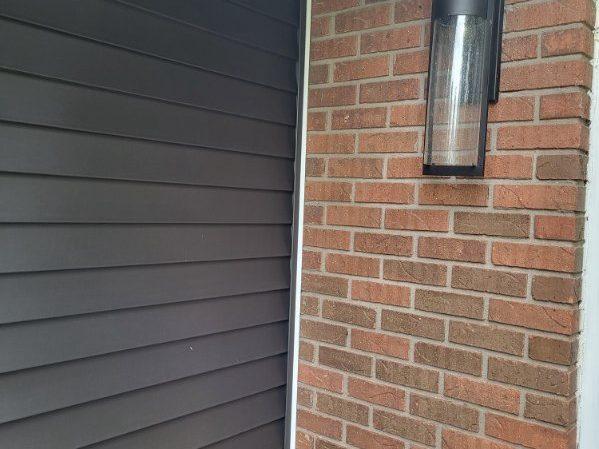
Siding, Fascia & Insurance
Storm Damage Insurance Claim
Sheffield Village
Storm-damaged siding documented for the insurer, then replaced with dark gray siding over new house wrap.
See the projectRelated services
Where Buckeye can help
Free estimate
Get a free siding estimate.
Tell us about the house and we will schedule a time to measure, inspect the trim and wood underneath, and write up the options.
Sources
- 1.Vinyl Siding Installation Manual, Vinyl Siding Institute (now the Polymeric Exterior Products Association) (2020 edition). Accessed Nov 17, 2026.
- 2.Preservation Brief 8: Aluminum and Vinyl Siding on Historic Buildings, National Park Service, Technical Preservation Services. Accessed Nov 17, 2026.
- 3.Lead Renovation, Repair and Painting Program, U.S. Environmental Protection Agency. Accessed Nov 17, 2026.
- 4.40 CFR 745.85 Work practice standards, Electronic Code of Federal Regulations. Accessed Nov 17, 2026.
- 5.Residential Siding and Exterior Elements Guide, Cleveland Landmarks Commission. Accessed Nov 17, 2026.