01
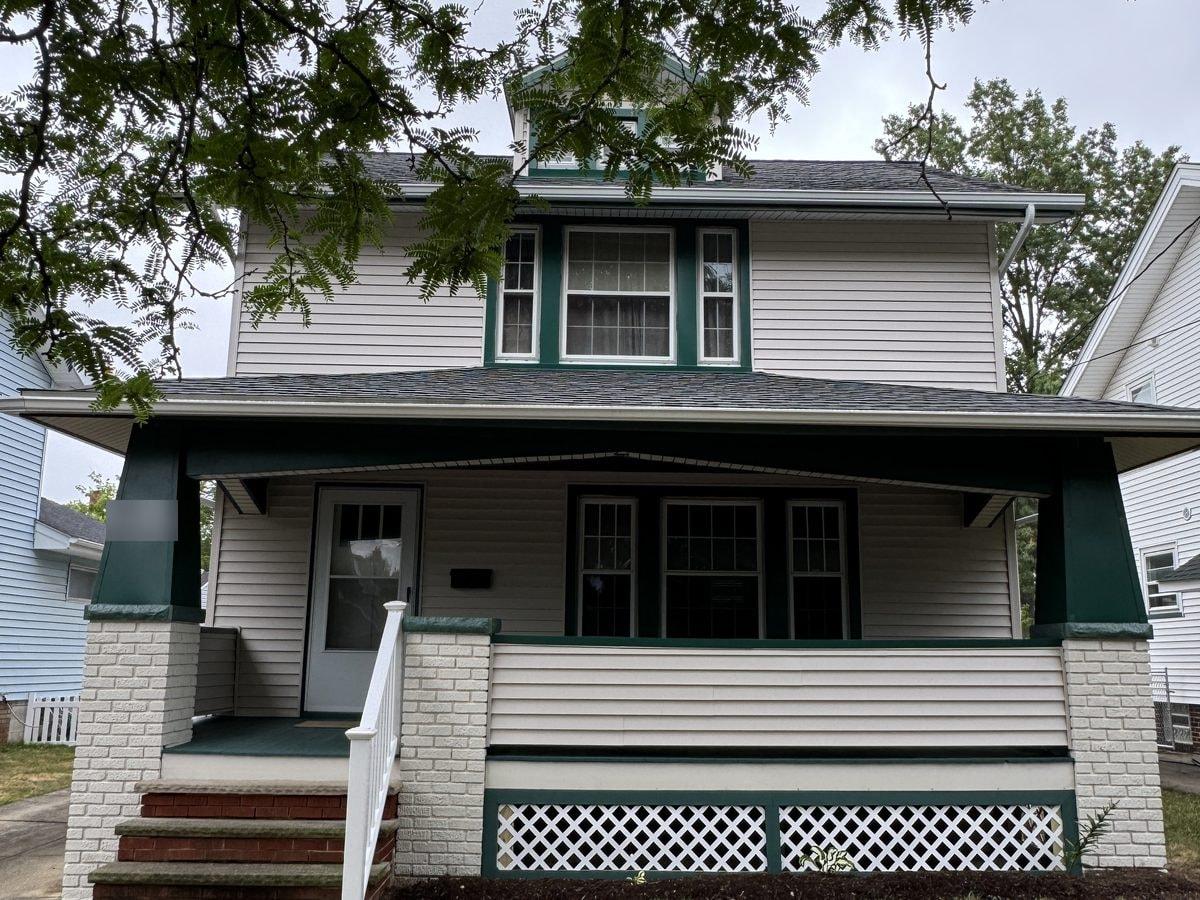
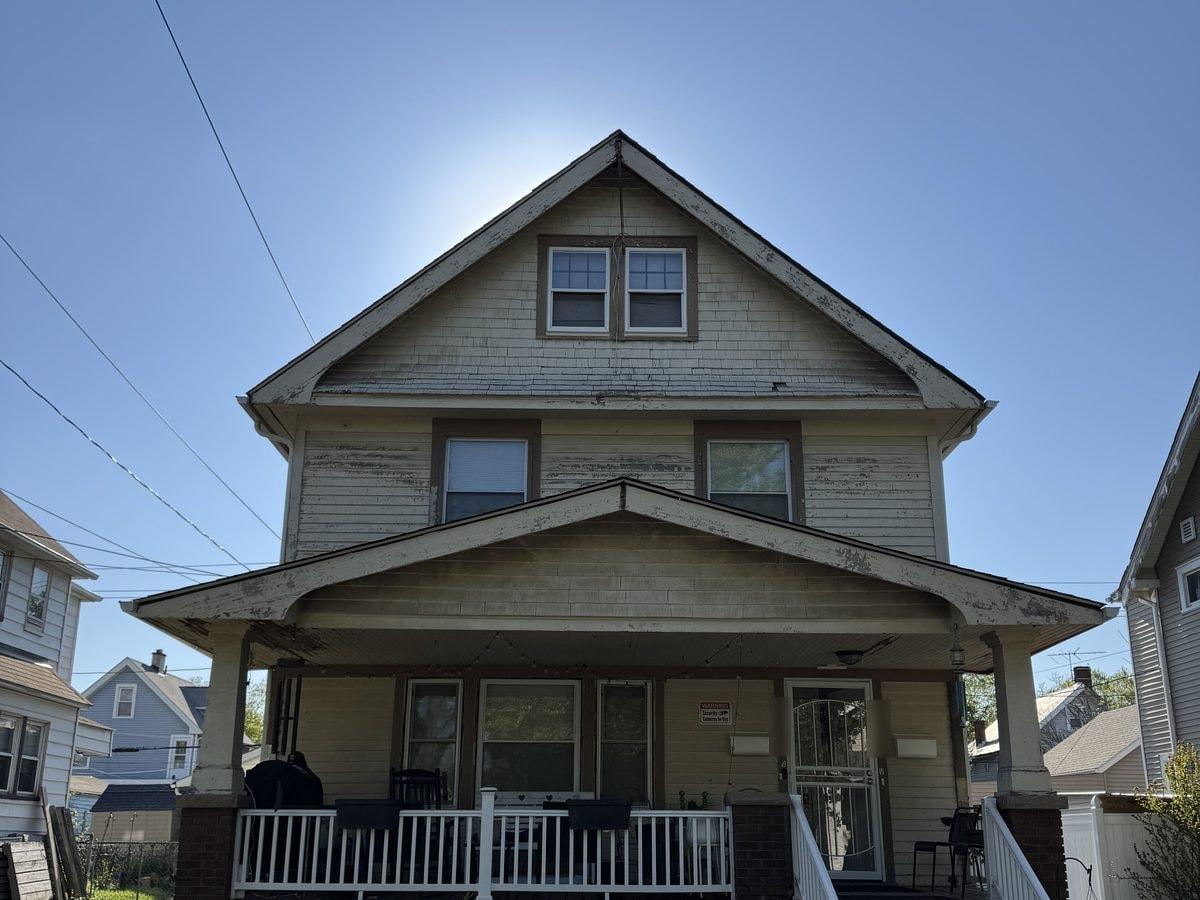
Painted wood shingles peeling
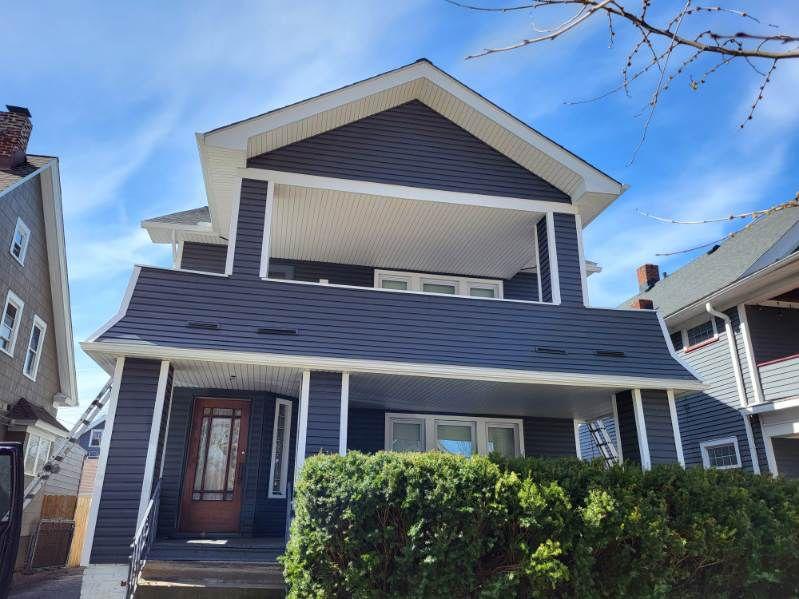
Gables are hard to reach, so painted wood shingles there often go years without upkeep.
Vinyl shake and scallop
Vinyl shake siding is molded to look like cedar shakes or shingles, and scallop is its rounded, fish-scale cousin. Buckeye installs both, most often on gables, dormers, and porch walls, combined with lap vinyl on the rest of the house to add texture without the upkeep of real wood.
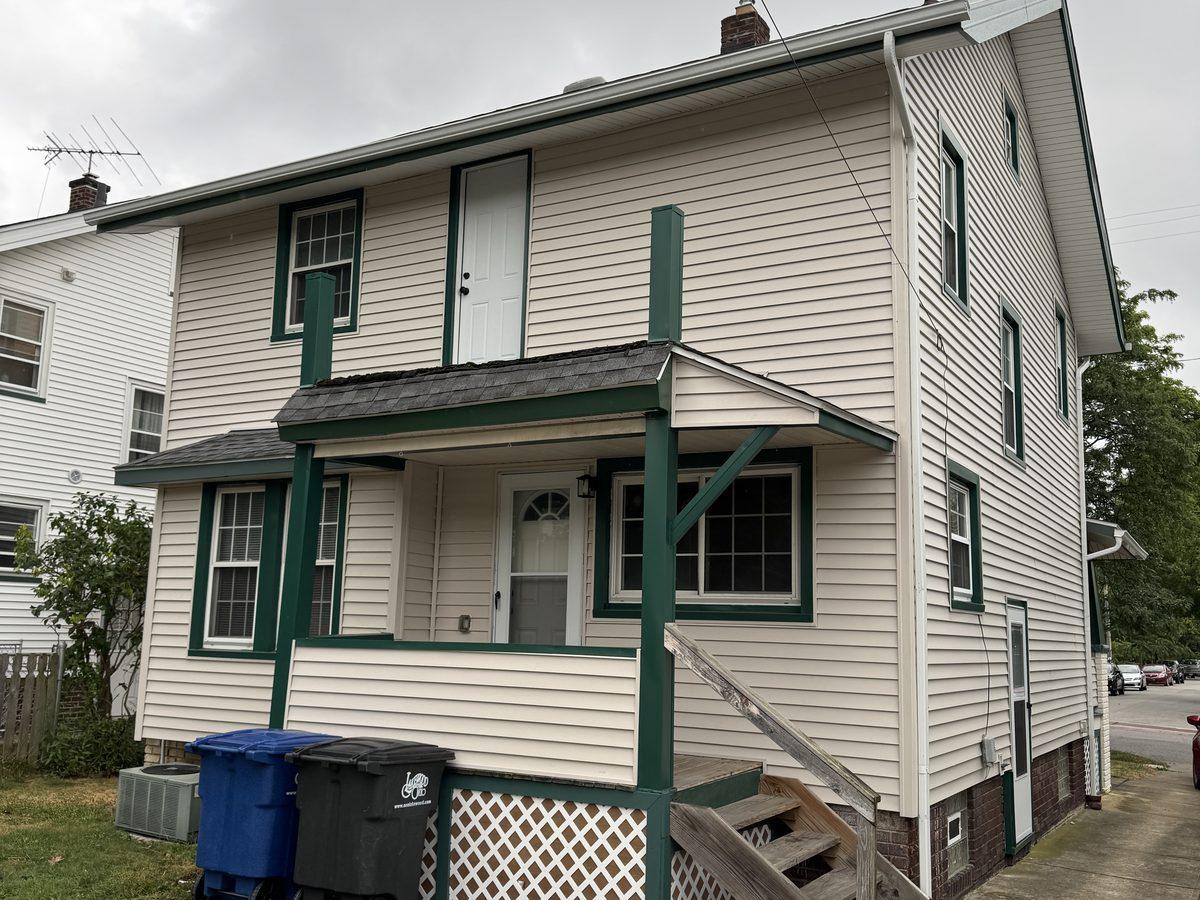
Shake is an accent tool. Used in the right spots, it breaks up a tall, flat wall and draws the eye to the roofline.
Is this right for you?
Shake looks best where there is a natural break in the wall, and on houses whose style already calls for it.
What to look for
Gables are hard to reach, so painted wood shingles there often go years without upkeep.
Wind and sun curl old wood shingles and leave gaps.
A big gable sided in the same lap as the walls can look plain from the street.
A siding job is the easiest time to add or replace an accent.
Options
Shake and scallop are offered as part of a vinyl siding job. Color and exposure are chosen to suit the house.
Rectangular shake profiles that read like cedar from the street.
Rounded half-cove profiles, common on Victorian and Queen Anne style gables.
The lap vinyl on the main walls, chosen to complement the accent.
Bent aluminum along the rake and fascia frames the shake section.
Real Buckeye projects
None of our published project write-ups feature shake yet. These lap-siding jobs show the kind of houses where shake accents are usually added.
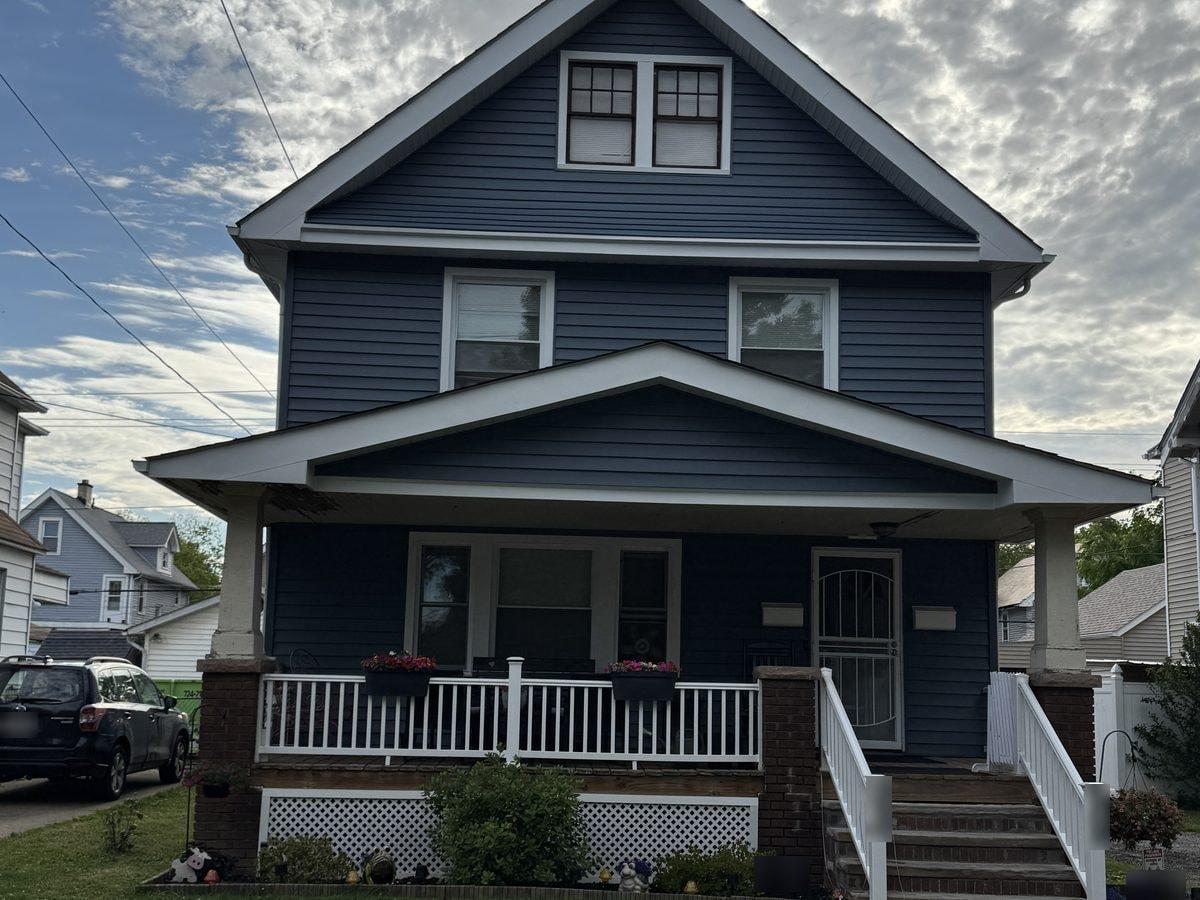
Vinyl Siding & Fascia
West Boulevard, Cleveland
Worn siding on an older Cleveland house replaced with blue vinyl siding and white aluminum fascia and window trim.
Blue siding with crisp white window trim and fascia gives this classic Cleveland home a sharper, modern finish.
Read the project storyHow the job runs
We mark where lap ends and shake begins, usually at a band board or a frieze line.
Old shingles or siding come off, and the sheathing is checked and wrapped.
A trim piece or channel separates the lap siding from the shake section.
Shake panels are set in courses up to the peak and cut to the rake angle.
The rake and fascia are wrapped so the edges are sealed and clean.
What is included
Timeline
Shake sections take longer per square foot than lap siding because of the cuts.
Cost factors
Shake costs more per square foot than standard lap vinyl, but it usually covers only a small part of the house. The cost guide lists cited national ranges for shake and lap vinyl.
A single gable is a modest add. Whole-house shake is a different budget.
High peaks add equipment and time.
More angles and more separate accent areas mean more labor.
Siding Design Studio
Upload a photo of your house and try siding colors and trim combinations before you decide. Results are design concepts, not exact renderings.
Greater Cleveland
Front-gable and double-front houses are common on older Cleveland and Lakewood streets. Census estimates show 59.6% of Lakewood's housing units and 48.6% of Cleveland's were built before 1940, and many of those homes were built with wood shingles or decorative siding in the gable.
Gables also take the most weather. With about 74 freeze-thaw days a year at Cleveland Hopkins, painted wood shingles high on a gable crack and curl long before anyone climbs up to repaint them. Vinyl shake keeps the look without the ladder work.[1][2]
Questions
Yes. Shake or scallop profiles work well on gables and accent areas, with horizontal lap siding on the rest of the house.
From the street, good vinyl shake reads as shingles. Up close it is clearly vinyl. The trade-off is that it never needs stain or paint.
Either works. Matching colors add texture quietly. A contrasting color makes the gable a feature. A rendering is the easiest way to decide.
Related services
Free estimate
Tell us about the house and we will schedule a time to measure, inspect the trim and wood underneath, and write up the options.
Send your ZIP and a phone number or email. We will follow up to schedule a visit.