01
Wavy or bowed walls
Panels nailed too tight cannot expand in summer sun, so they ripple.
Siding installation
A good vinyl siding installation starts with a flat, dry, wrapped wall and ends with panels that can move with the weather without buckling. Buckeye installs vinyl siding on houses, additions, and garages around Greater Cleveland, measuring and bending the aluminum trim at the house so every opening is sealed.
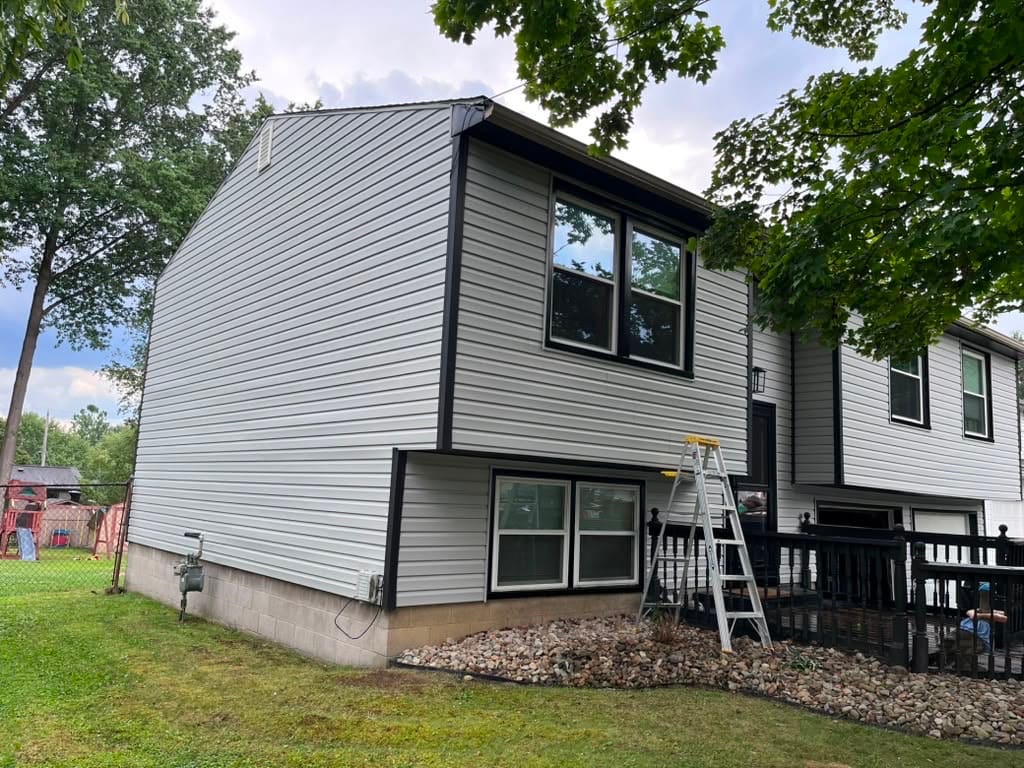
This page walks through the install itself, so you know what the crew is doing each day and what to ask any contractor you are comparing.
Is this right for you?
If you are planning new siding and want to understand the work before you sign, this is the page. It applies to full re-siding after a tear-off, additions, garages, and detached buildings.
What to look for
Panels nailed too tight cannot expand in summer sun, so they ripple.
Missing or short J-channel leaves raw cut edges and lets water in.
Nails through the face of a panel instead of the nailing hem crack the vinyl and leak.
Vinyl sheds most water, not all of it. A weather barrier behind it handles the rest.
Options
Every installation combines a main siding profile with accents and trim. These are the pieces Buckeye installs.
The horizontal profile on most houses we side.
Vinyl shake profiles for gables and dormers.
Vented or solid soffit panels under the eaves where the job calls for it.
Fascia, window, door, and post wrap formed on site from trim coil.
Real Buckeye projects
Finished installs from Buckeye's project records.
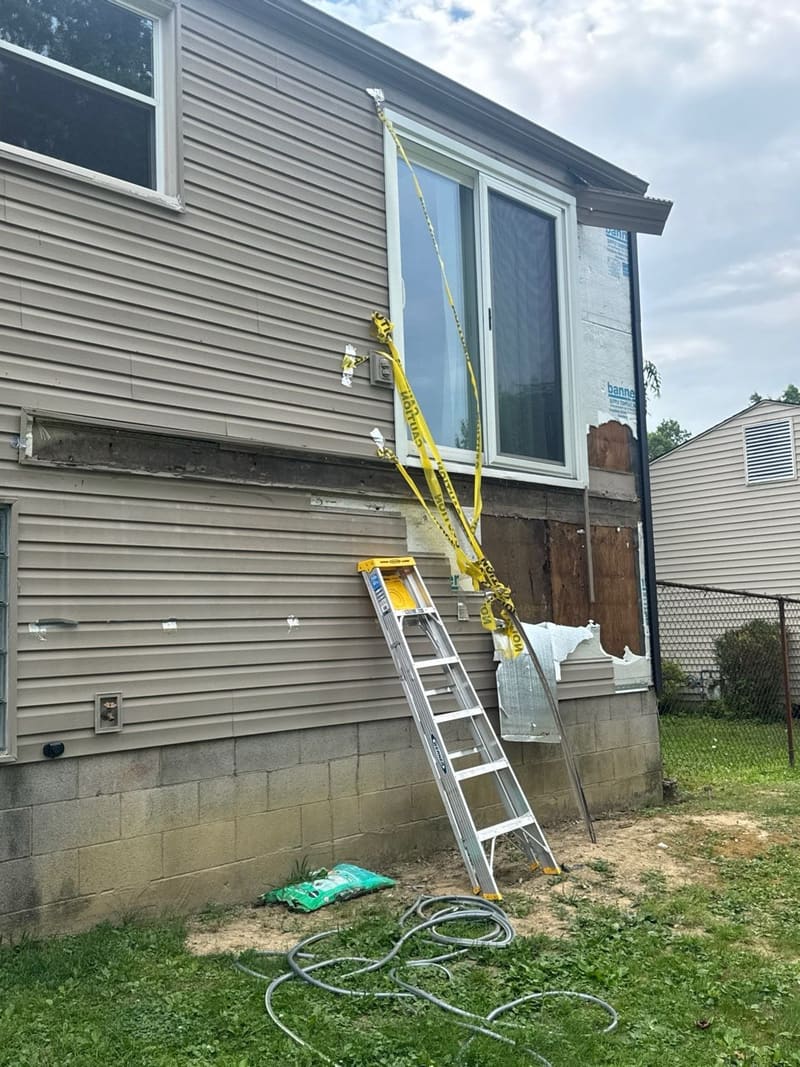
Vinyl Siding
McDonald
Light-gray siding with bold dark trim, requested after the homeowner saw a nearby Buckeye project.
The installation refreshed the home's siding and used dark trim around the windows, corners, and roofline to define its architectural lines.
Read the project storyHow the job runs
Old siding is removed, loose sheathing refastened, and soft wood replaced so the wall is flat and solid.
A weather-resistant barrier goes on over the sheathing, lapped so water runs down and out.
A level starter strip sets the first course. Outside and inside corner posts go on next.
J-channel and trim go around windows and doors so cut panel ends are covered and water is directed away.
Each course locks into the one below and is nailed loosely in the hem so it can expand and contract.
Fascia and casings are wrapped, the site is cleaned, and we walk the house with you.
What is included
Timeline
We will give you a schedule after measuring. These are the details that change it.
Cost factors
Installation labor is driven by how complicated the walls are, not just how big they are. See the cost guide for cited ranges and the calculator for a planning number.
More square feet means more material and labor.
Bays, dormers, and many small windows add trim and cuts.
Shake sections and color changes add separate materials and transitions.
Sheathing repair and furring out uneven walls happen before any siding goes up.
Siding Design Studio
Upload a photo of your house and try siding colors and trim combinations before you decide. Results are design concepts, not exact renderings.
Greater Cleveland
Vinyl expands in summer heat and shrinks in winter cold, so it has to be hung, not pinned. Around Cleveland that movement is constant: the 1991–2020 normals show an average of 111 days a year with a low at or below freezing, and about 74 of those days warm back above freezing by afternoon.
March alone averages about 16 freeze-thaw days at Cleveland Hopkins. Panels nailed too tight crack or ripple under that kind of cycling, which is why we leave room at every nail and every channel.[1]
Questions
Vinyl expands and contracts with temperature. Nails driven snug, centered in the slots, let each panel slide. Panels nailed tight cannot move and will buckle or crack.
Vinyl is a rain screen, not a waterproof skin. Some water always gets behind it at laps and openings. House wrap behind the siding keeps that water off the sheathing.
We can often get close in profile and color. Exact matches are hard when the existing siding is old, faded, or discontinued. We will show you samples against the house before you decide.
Related services
Free estimate
Tell us about the house and we will schedule a time to measure, inspect the trim and wood underneath, and write up the options.
Send your ZIP and a phone number or email. We will follow up to schedule a visit.