01
Damage on more than one wall
Once patches are needed all around the house, the labor adds up and the result looks pieced together.
Siding replacement
Siding replacement means stripping the old siding down to the sheathing, fixing any rotted wood, wrapping the wall, and installing new vinyl siding and trim. It is the right call when damage, rot, or fading covers more of the house than a repair can fix, and Buckeye does it for homes across the west and south sides of Greater Cleveland.
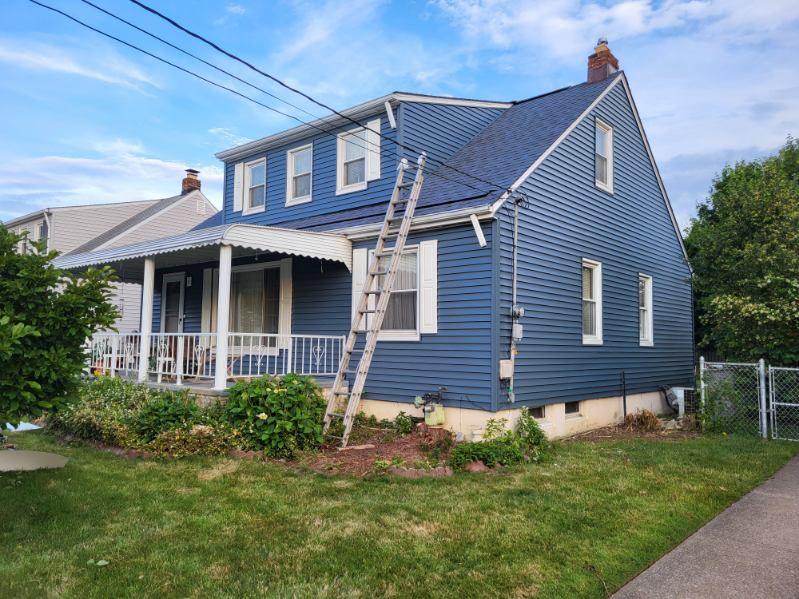
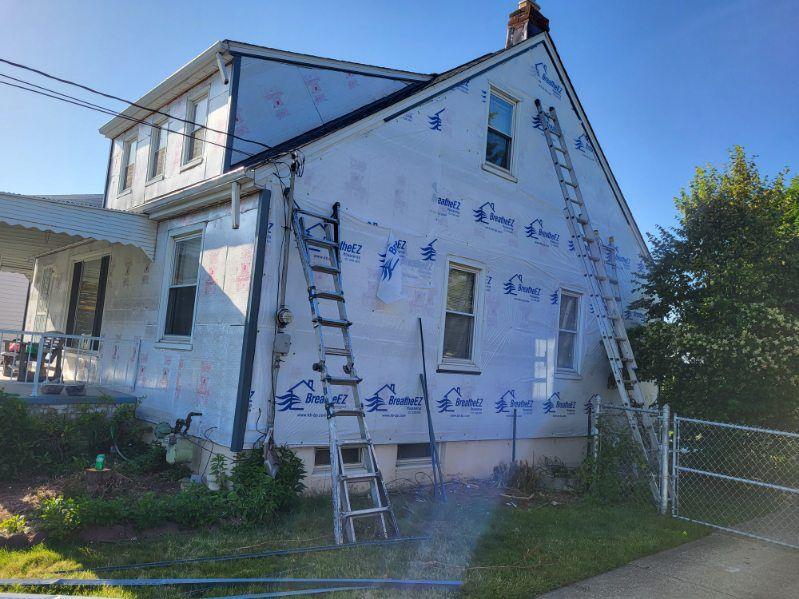
Tearing off, rather than siding over the old material, lets us see and fix what is underneath. That is where most problems on older Cleveland houses are hiding.
Is this right for you?
Replacement is a bigger job than repair, so it should solve a bigger problem. These are the situations where we usually recommend it.
What to look for
Once patches are needed all around the house, the labor adds up and the result looks pieced together.
Old vinyl that cracks when you press it, or waves and buckles in the sun, will keep failing panel by panel.
Rot near the bottom of walls and under windows usually means water has been getting behind the siding for years.
Vinyl or aluminum nailed over old wood can trap moisture. Replacement takes it back to the sheathing.
Options
A replacement is more than panels. These are the pieces Buckeye installs on a typical job.
Lap profiles in the color and texture you choose, installed over a wrapped wall.
Vinyl shake or scallop on gables or dormers to break up a large wall.
Aluminum over sound fascia boards along the roofline.
Bent aluminum around casings so the openings match the new siding and shed water.
Real Buckeye projects
Full tear-off and replacement jobs from Buckeye's project records.
Full Siding Replacement
Full siding replacement with white trim accents to bring out the architectural details.
A full siding replacement addressed the worn exterior while white trim highlights the home's architectural details.
Read the project story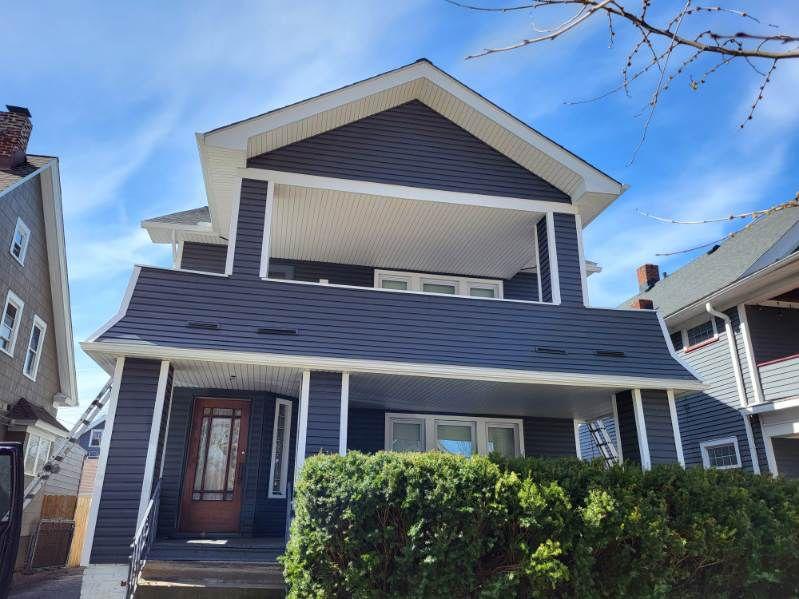
New dark siding with crisp white trim, chosen together with the homeowner to sharpen the house's lines.
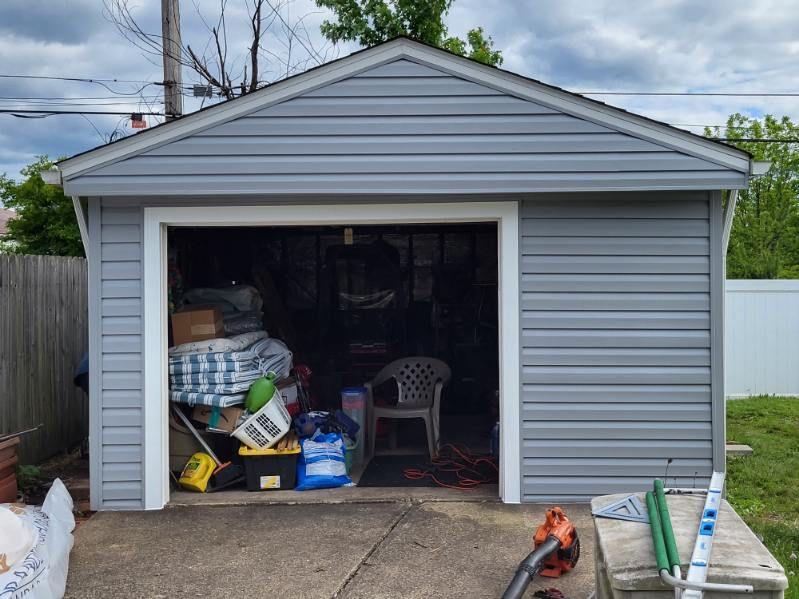
Fading wood siding torn off a garage and replaced with vinyl.
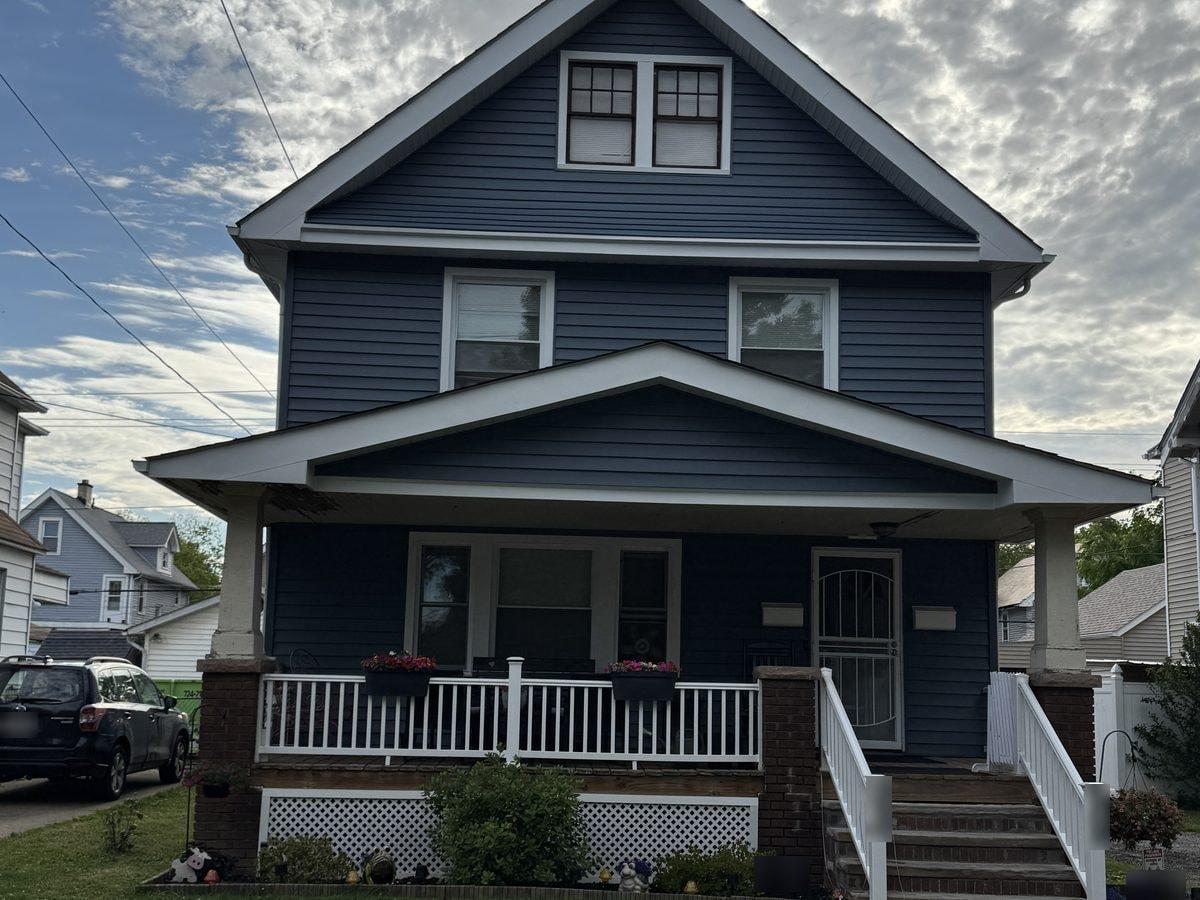
West Boulevard, Cleveland
Worn siding on an older Cleveland house replaced with blue vinyl siding and white aluminum fascia and window trim.
How the job runs
We look at the siding, trim, and seams, probe suspect wood, and measure every wall.
It lists tear-off, materials, trim, and the wood repair we expect, so nothing is a surprise.
Choose profile, color, and trim before materials are ordered.
Old siding comes off one area at a time. Soft wood is replaced before anything covers it.
House wrap goes on, then starter strip, corners, channel, panels, and aluminum trim.
Debris is hauled away, and we walk the house with you before the job is closed out.
What is included
Hidden rot can only be fully seen after tear-off. If we find more than expected, we show you before doing extra work.
Timeline
We set the schedule after measuring and looking at the walls, because a garage and a two-story house with porches are very different jobs.
Cost factors
Replacement price follows wall area first, then tear-off and trim. The cost guide has cited national ranges for vinyl and for removing old siding, and the calculator gives a quick planning range for your house.
The main driver. Gables and second stories add area that is easy to underestimate from the ground.
More layers and heavier materials mean more labor and more dumpster loads.
Priced by what is found. Older houses tend to need more.
Long rooflines, many windows, and height add aluminum, bending time, and access equipment.
Plan your budget
Get a planning range from your home's size, stories, and material. No contact information required to see a result.
Greater Cleveland
48.6% of Cleveland's housing units and 59.6% of Lakewood's were built before 1940, according to Census estimates. On houses that age, the siding we remove is often the second or third layer, and the original wood underneath has had decades to take on water.
Weather finishes the job. Cleveland Hopkins records about 89 days a year with a tenth of an inch of rain or more and about 74 freeze-thaw days. Water trapped between layers freezes, expands, and works the wood loose, which is why we take siding back to the sheathing instead of covering it.[1][2]
Questions
Our replacement jobs are tear-offs. Removing the old siding lets us find and repair rot, put house wrap on the sheathing, and keep the new siding flat. If your situation is different, we will explain the options at the estimate.
We show you what we found, explain the repair, and confirm any change in price before the wall is covered. Rotted wood is never wrapped over.
Sometimes. If matching siding is still made and the color has not faded much, one or two walls can be replaced. When the old siding is discontinued or sun-faded, the new section will stand out, and full replacement is usually the better choice.
Only when the damage is from a covered cause, such as some wind or hail losses. Your insurer makes that call.
Related services
Free estimate
Tell us about the house and we will schedule a time to measure, inspect the trim and wood underneath, and write up the options.
Send your ZIP and a phone number or email. We will follow up to schedule a visit.