Here is what the published life-expectancy figures say, how Cleveland's climate affects vinyl, the specific things that shorten its life, and the inexpensive habits that help it last.
On this page
What the published numbers say
InterNACHI, the home inspectors' association, publishes a widely used chart of typical component lifespans. It lists vinyl siding at about 60 years, aluminum siding at 25 to 40-plus years, and caulking at 5 to 10 years.[1] InterNACHI is clear that these figures assume normal wear and maintenance and are guidelines only, not guarantees.
Manufacturer warranties are a different thing. A warranty describes what the manufacturer will do if the product fails under specific conditions; it is not a prediction of lifespan, and the National Park Service notes that manufacturer warranties normally do not cover installation.[2] Read the terms on the product you are considering, including how fading and labor are handled.
How Cleveland's climate affects vinyl
Vinyl expands in heat and shrinks in cold. The Vinyl Siding Institute notes that a standard 12-foot-6-inch panel can move half an inch or more across the temperature range.[3] Cleveland gives it plenty of practice: the airport averages about 111 days a year with a low at or below freezing and about 74 days that freeze at night and thaw during the day.[4]
That movement is not a problem when the siding is hung correctly. It becomes one when panels are nailed tight, when there is no room at the ends of panels, or when trim pieces pinch them. Those panels buckle, crack, or pull loose over time.
Cold also makes vinyl more brittle. The National Park Service notes that vinyl's impact resistance decreases in cold weather.[2] A ball, a ladder, or a chunk of ice falling off the roof in January is more likely to crack a panel than the same hit in July.
The things that shorten vinyl siding's life
Most early failures trace back to a short list.
- Tight nailing: the Vinyl Siding Institute calls for about 1/32 inch of space under the nail head so panels can slide; nails driven tight cause buckling[3]
- No water-resistive barrier: vinyl sheds most water but is not a barrier, so walls need house wrap or an equivalent behind it[3]
- Missing flashing at windows, doors, and roof-to-wall intersections, which lets water behind the panels
- Impact damage from hail, branches, and equipment, especially in cold weather
- Heat from reflected sunlight or grills placed too close to the wall, which can warp panels
- Gutters that overflow or leak onto the same section of wall every storm
Storms, hail, and wind
Wind and hail are part of the picture in Cuyahoga County. NOAA's Storm Events Database lists damaging thunderstorm wind reports on 66 days and hail reports on 16 days from 2016 through 2025, with the largest hail reports at 2 inches.[5] Not every house is hit, but over a few decades most will see at least one storm that tests the siding.
Wind damage to vinyl usually starts where panels were not fully locked or nailed, often at corners, gables, and the top course under the soffit. Hail damage tends to show as cracks and holes on the side facing the storm. After a severe storm, check those spots and photograph anything you find; our guide to documenting storm damage explains what to capture.
Fading and color
All siding colors change over time with sun exposure, and the change is usually most noticeable on south- and west-facing walls. The National Park Service points out that factory finishes on vinyl and aluminum change with time, which makes matching replacement panels difficult later.[2] Darker colors show it more. If you are choosing a dark color, ask about the product's fade warranty and keep a few spare panels from the original installation for future repairs.
How to help vinyl siding last
Maintenance for vinyl is light, but it is not zero.
- Wash once a year with a soft brush or cloth and a garden hose, working from the bottom up, as the Vinyl Siding Institute recommends[3]
- Keep gutters clean and downspouts pointed away from the house
- Keep grills, fire pits, and mulch piled against the wall away from the siding
- Check caulk around windows and trim every few years and reseal where it has cracked
- Fix loose or cracked panels promptly before water gets behind them
- Trim shrubs and branches back from the walls
When old vinyl should be replaced
Replace vinyl siding when problems are widespread: cracked or warped panels on several walls, soft sheathing behind the panels, or repeated repairs in the same areas. A single damaged section on otherwise sound siding is usually a repair. Our guide to the signs it is time to replace siding covers the decision in more detail, and tear-off vs installing over existing siding explains why removing the old layer is usually worth it.
Real Buckeye projects
Work we have finished on homes like this
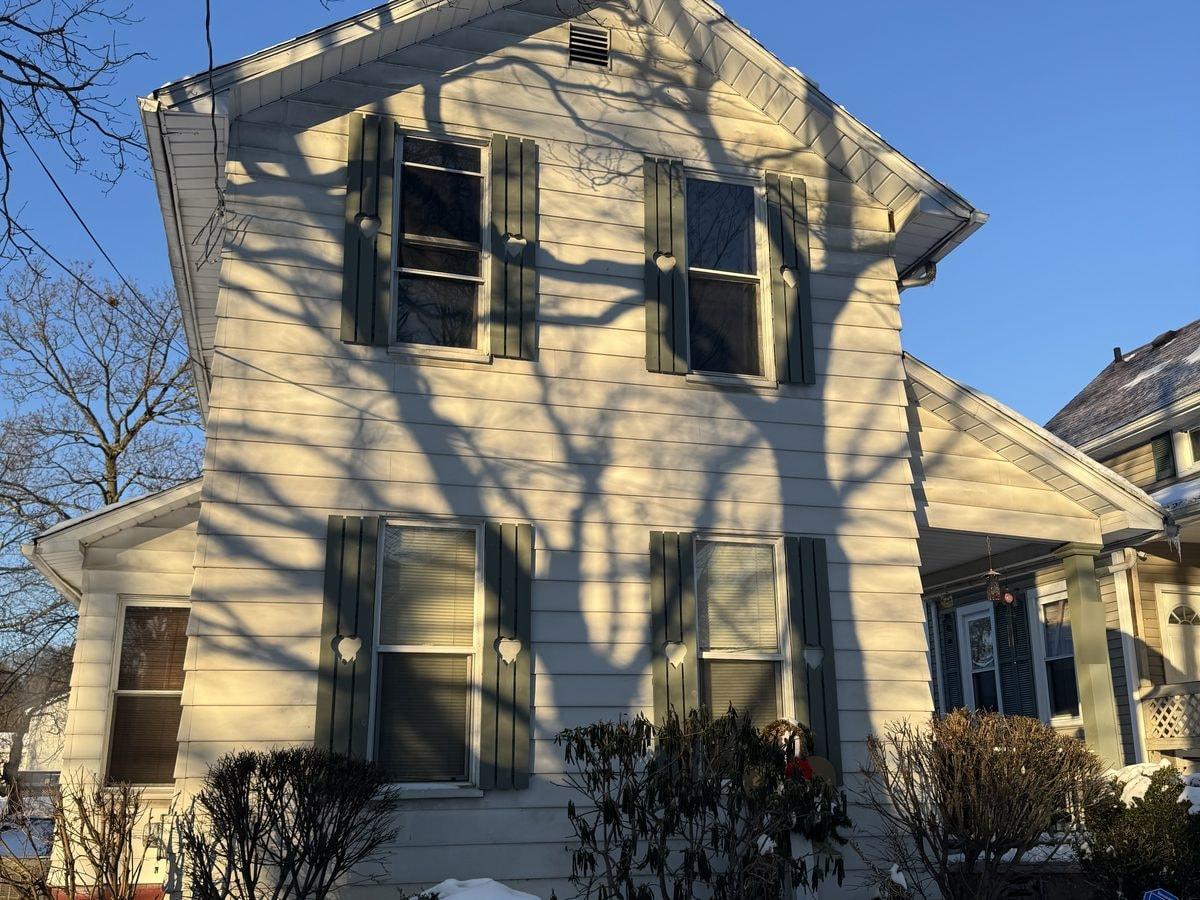
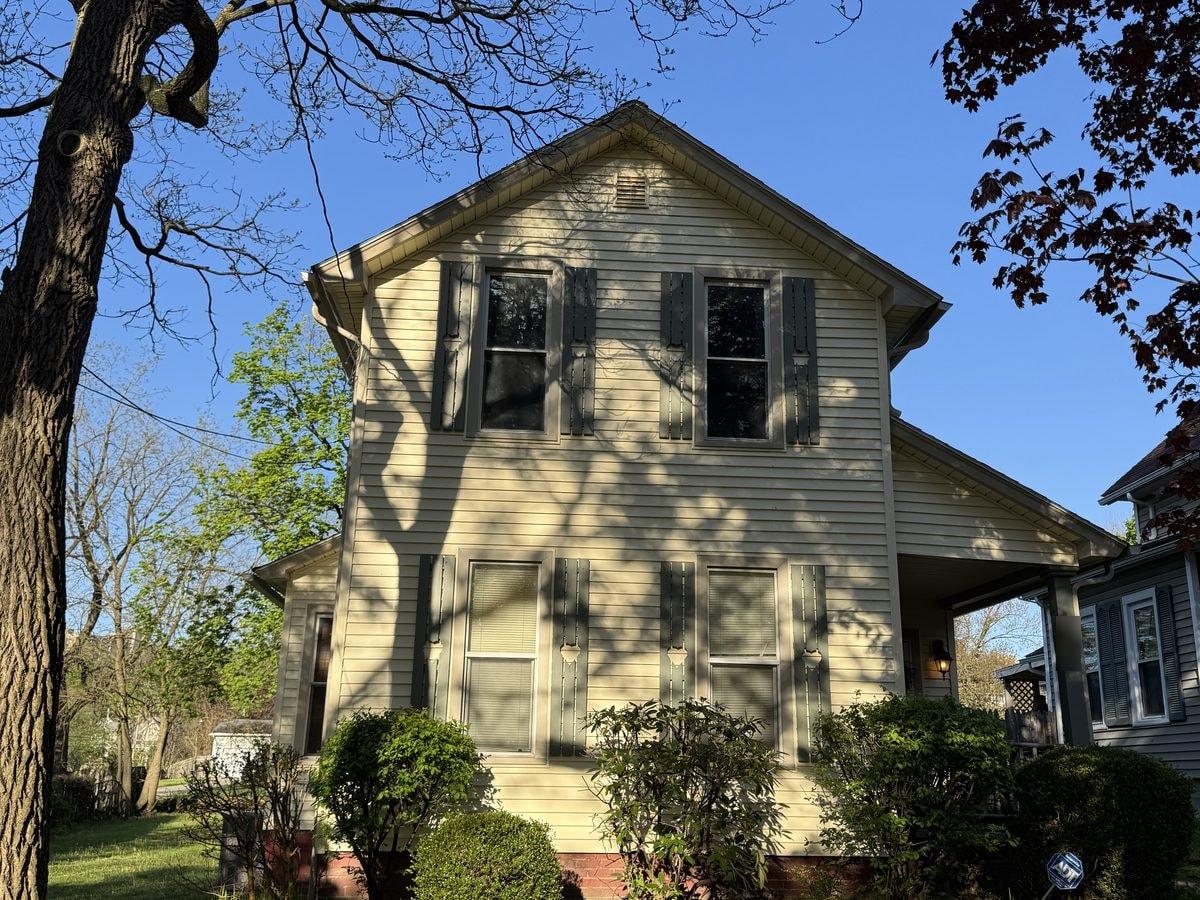
Vinyl Siding & Fascia
Traditional-Style Vinyl Siding Refresh
Akron
New light vinyl siding and wrapped fascia on an older Akron house, keeping its traditional look.
See the project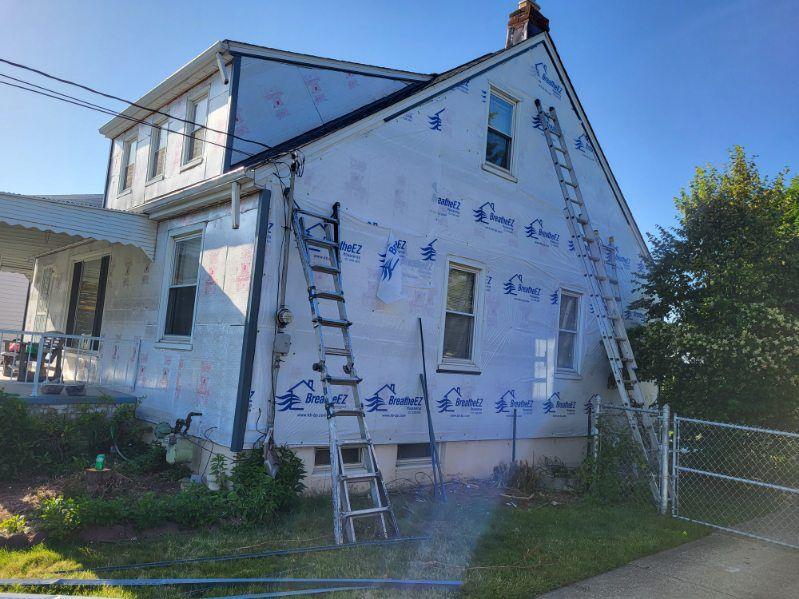
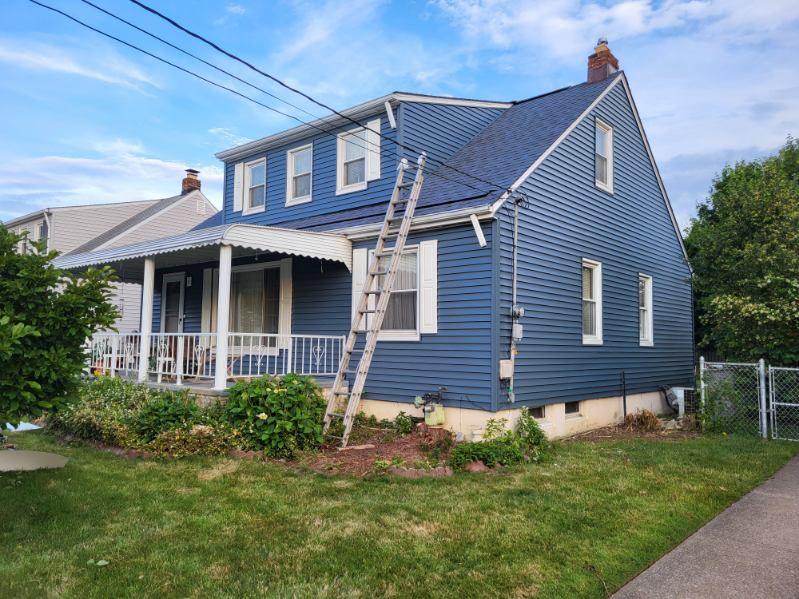
Full Siding Replacement
Complete Exterior Makeover
Full siding replacement with white trim accents to bring out the architectural details.
See the projectRelated services
Where Buckeye can help
Free estimate
Get a free siding estimate.
Tell us about the house and we will schedule a time to measure, inspect the trim and wood underneath, and write up the options.
Sources
- 1.InterNACHI's Standard Estimated Life Expectancy Chart for Homes, International Association of Certified Home Inspectors. Accessed Nov 17, 2026.Guideline figures assuming regular maintenance and normal wear.
- 2.Preservation Brief 8: Aluminum and Vinyl Siding on Historic Buildings, National Park Service, Technical Preservation Services. Accessed Nov 17, 2026.
- 3.Vinyl Siding Installation Manual, Vinyl Siding Institute (now the Polymeric Exterior Products Association) (2020 edition). Accessed Nov 17, 2026.
- 4.U.S. Climate Normals 1991–2020, Cleveland Hopkins International Airport (USW00014820), NOAA National Centers for Environmental Information. Accessed Nov 17, 2026.Thirty-year averages at one airport station; lakeshore and snowbelt communities differ.
- 5.Storm Events Database, Cuyahoga County, Ohio, 2016–2025, NOAA National Centers for Environmental Information. Accessed Nov 17, 2026.Counts are events reported to the National Weather Service, not a measure of damage to any home.