Fascia is the board along the roof edge where gutters usually hang. It takes a lot of water, which is why it is one of the first places paint fails on a Cleveland house. This guide explains what wrapping is, how it should be done, and when the wood needs to be replaced first.
On this page
What fascia and trim wrapping is
Wrapping means covering wood trim with aluminum that is cut and bent on site from flat coil stock, using a portable brake, to fit each board's shape. It is used on fascia boards, window and door trim, rake boards along gables, and sometimes porch beams and columns. Soffit, the underside of the roof overhang, is usually covered with separate vented or solid soffit panels.
The result is a crisp, painted-looking finish that does not peel. Aluminum does not rot, and the factory coating means no scraping or repainting. Buckeye Exteriors does aluminum fascia and trim wrapping, and it appears in several of our completed siding projects.
Why wood fascia fails
Fascia sits right where water collects. Overflowing or leaking gutters soak it, ice dams push meltwater against it, and the end grain at corners absorbs water. Paint on exterior wood generally needs renewal every several years; InterNACHI lists exterior paint at about 7 to 10 years and the National Park Service cites USDA research putting two coats of paint on wood at about 8 to 10 years.[1][2] Once paint fails, water gets into the wood and rot follows.
Signs of trouble include peeling paint that returns quickly after repainting, dark stains, soft spots you can press a screwdriver into, gutters pulling away from the board, and gaps where the fascia meets the roof edge.
Wrap the sound wood, replace the rotted wood
Wrapping does not stop rot that has already started. Aluminum over a wet, decaying board traps moisture and hides the problem while it spreads into rafter tails and roof decking. Before wrapping, the boards should be checked by probing, not just looked at. Soft sections get replaced with new lumber, and the source of the water, often a gutter problem or ice dam, should be addressed.
The Vinyl Siding Institute gives the same rule for siding: rotten material should be replaced and new cladding should not be installed over rotting wood.[3] A good wrapping estimate states how many feet of replacement board are included and the price for any extra found during the job.
How aluminum fascia should be installed
Aluminum moves with temperature, so it has to be fastened loosely enough to expand and contract, or it will ripple and oil-can. The VSI manual's guidance for aluminum fascia covers is a good benchmark: fasten with trim nails no more than 24 inches apart, pre-drill or punch nail holes, do not nail tight, and overlap joints by about 3/4 inch.[3]
- Use aluminum or stainless steel fasteners to avoid corrosion and staining[3]
- Overlap joints away from the main view, such as facing away from the driveway
- Tuck the top edge under the drip edge so water cannot get behind it
- Hang gutters through the wrap into solid wood, not just into the aluminum
- Avoid face-nailing in the middle of wide flat areas where possible
Lead paint on older trim
Census estimates put about 79 percent of the City of Cleveland's housing units as built before 1970,[4] and trim on houses that age often has layers of old paint. Under EPA's Renovation, Repair and Painting rule, paid work that disturbs painted surfaces on those houses must be done by a certified firm using lead-safe practices.[5] The exemption for minor repair covers only up to 20 square feet of disturbed paint on the exterior, which a full fascia job will often exceed.[6]
Wrapping can limit how much paint is disturbed, because the boards stay in place, but prep work such as scraping loose paint or removing damaged boards still counts. One Buckeye project in Cleveland's Brooklyn Centre neighborhood involved wrapping fascia where the homeowner faced lead-related concerns from the city; the work was coordinated with a lead inspector. Our lead paint guide covers the rules in more detail.
Color, matching, and historic houses
Aluminum trim coil comes in many colors. Common choices are white or a trim color that matches the windows, and gutters typically match the fascia so the roof edge reads as one line. Cleveland's Landmarks Commission recommends gutters the same color as the fascia for houses in historic districts.[7]
In designated historic districts, the Commission also asks that original trim be retained rather than covered, so check before wrapping decorative trim on a landmark house.[7] Outside historic districts, a careful wrap that follows the shape of the original boards keeps most of the house's character.
How long it lasts and what it needs
InterNACHI's guideline chart lists aluminum soffit and fascia at 20 to 40-plus years.[1] Aluminum can dent from ladders, hail, and impacts, and dents are hard to repair invisibly.[2] Maintenance is minimal: rinse with a hose, keep gutters clean so they do not overflow onto it, and reseal any open joints at corners.
Real Buckeye projects
Work we have finished on homes like this
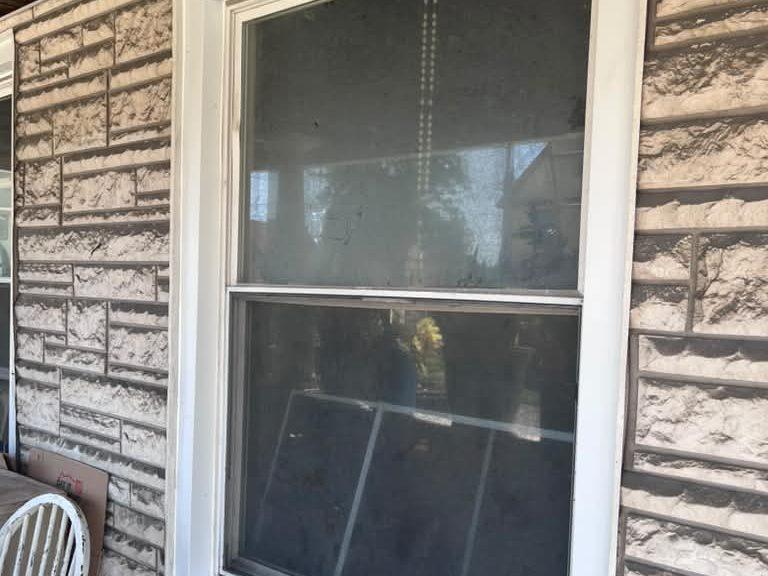
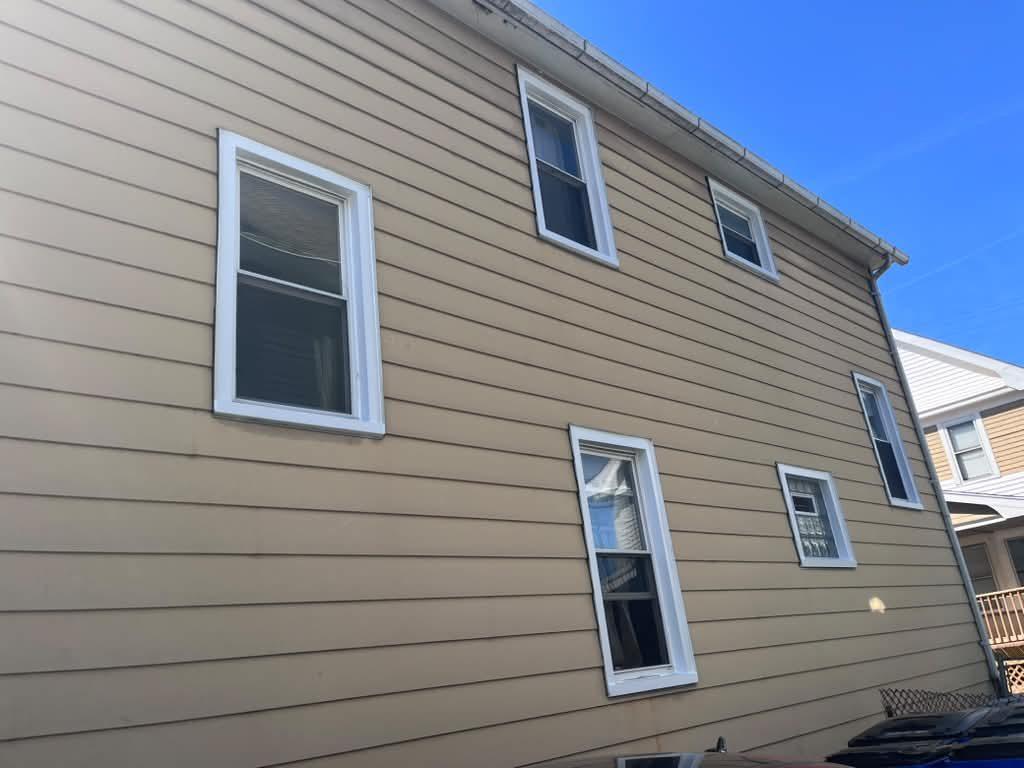
Fascia Wrap & Lead Compliance
Lead-Safe Fascia Wrap
Brooklyn Centre, Cleveland
Fascia wrapped in place to address lead-related concerns, coordinated with a lead inspector.
See the project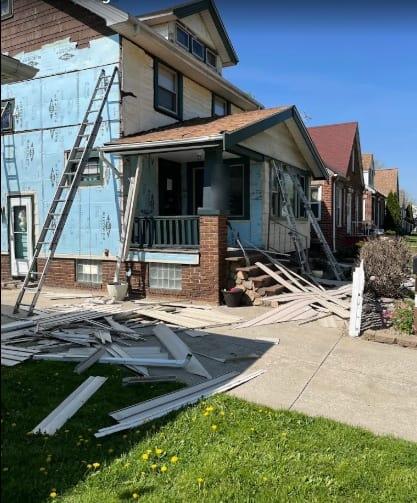
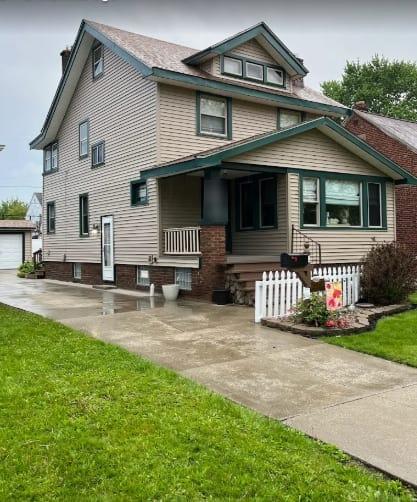
Siding, Fascia & Insurance
Insurance-Approved Exterior Restoration
Bellaire-Puritas, Cleveland
Siding and aluminum fascia wrap completed within the homeowner's insurance-approved scope.
See the project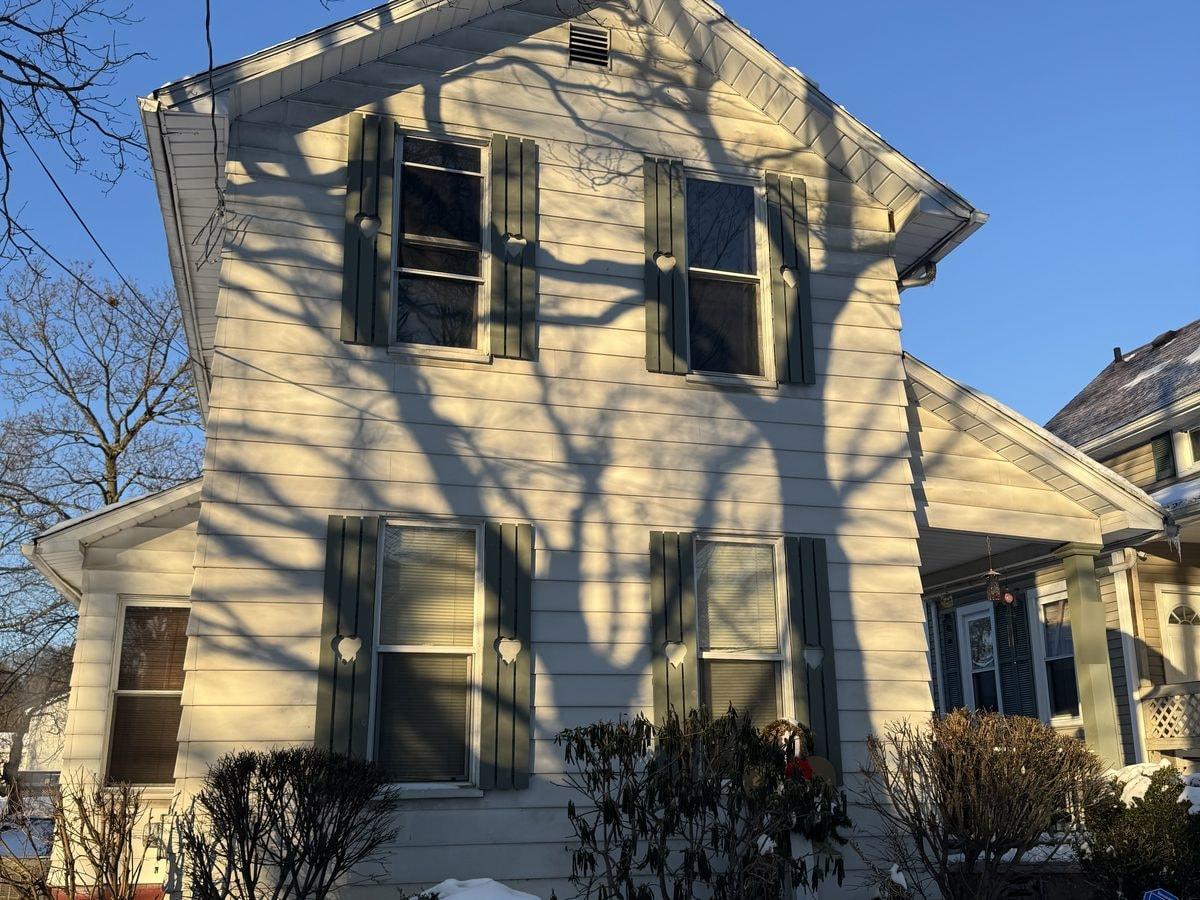
Vinyl Siding & Fascia
Traditional-Style Vinyl Siding Refresh
Akron
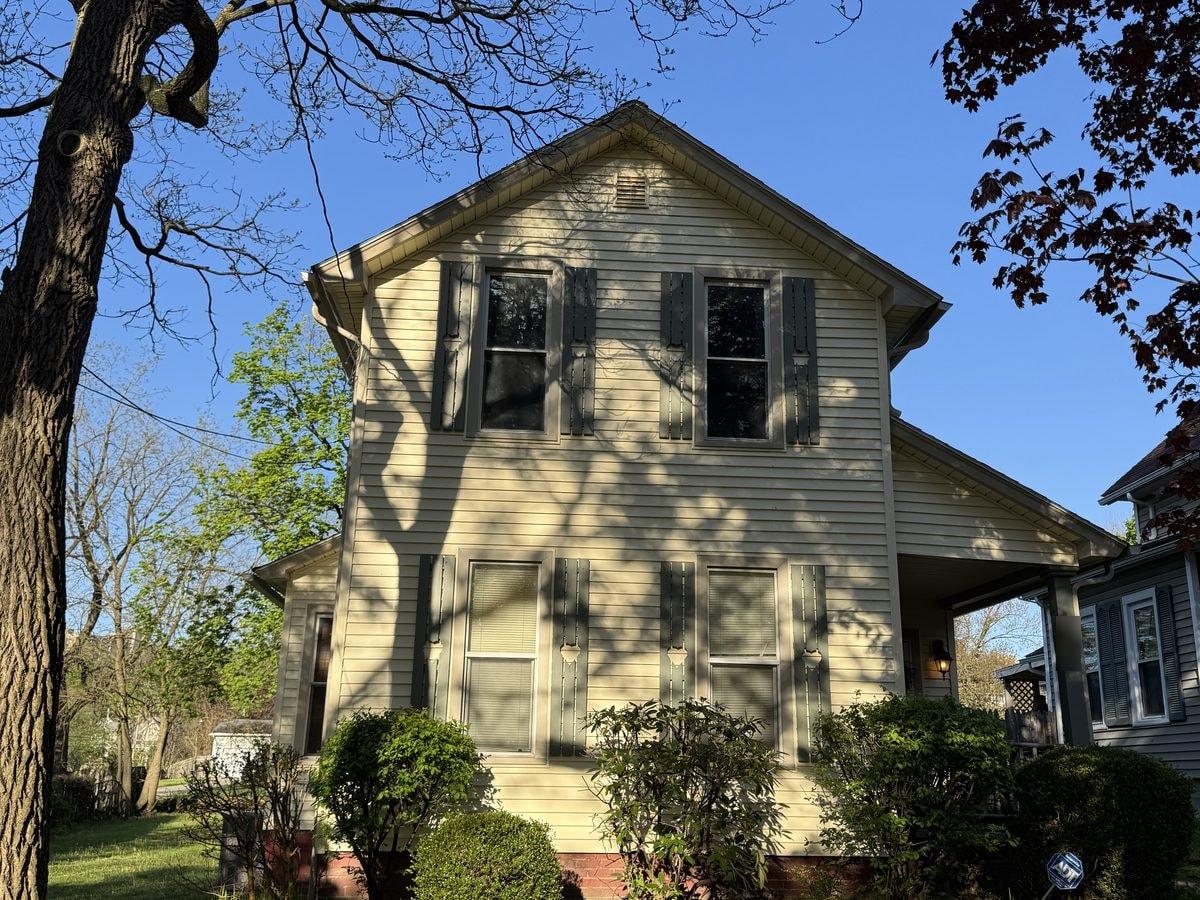
New light vinyl siding and wrapped fascia on an older Akron house, keeping its traditional look.
See the projectRelated services
Where Buckeye can help
Talk to Buckeye
Questions about your project?
Call or text to talk through siding, trim, roofing, or gutters. We are available Monday through Saturday.
Sources
- 1.InterNACHI's Standard Estimated Life Expectancy Chart for Homes, International Association of Certified Home Inspectors. Accessed Nov 17, 2026.Guideline figures assuming regular maintenance and normal wear.
- 2.Preservation Brief 8: Aluminum and Vinyl Siding on Historic Buildings, National Park Service, Technical Preservation Services. Accessed Nov 17, 2026.
- 3.Vinyl Siding Installation Manual, Vinyl Siding Institute (now the Polymeric Exterior Products Association) (2020 edition). Accessed Nov 17, 2026.
- 4.American Community Survey 2020–2024 5-year estimates: year structure built, U.S. Census Bureau. Accessed Nov 17, 2026.Survey estimates with margins of error; year built is reported by respondents.
- 5.Lead Renovation, Repair and Painting Program, U.S. Environmental Protection Agency. Accessed Nov 17, 2026.
- 6.40 CFR 745.83 Definitions (minor repair and maintenance), Electronic Code of Federal Regulations. Accessed Nov 17, 2026.
- 7.Residential Siding and Exterior Elements Guide, Cleveland Landmarks Commission. Accessed Nov 17, 2026.