Greater Cleveland has a lot of older housing. Census estimates put the median year built at 1941 in the City of Cleveland, and at 1939 or earlier in Lakewood, where about 60 percent of housing units predate 1940.[1] Here is a practical way to choose siding and trim colors for houses like these, with examples from Buckeye projects.
On this page
Start with what stays
Most siding projects keep the roof, foundation, chimney, and any brick or stone. Those fixed colors limit what will look right. A warm red-brown brick reads well with creams, warm grays, and deep greens; a gray or charcoal roof pairs easily with blues, grays, and whites; a brown roof leans toward warmer body colors. Hold siding samples directly against the brick and in view of the roof before deciding.
Gutters and downspouts count too. Cleveland's Landmarks Commission recommends gutters the same color as the fascia, which keeps the roof edge clean.[2] If gutters are staying, factor in their color or plan to replace them as part of the project.
Match the color approach to the house style
Older Cleveland-area houses span several styles: Cleveland doubles, foursquares, bungalows, colonials, and Cape Cods. Each has a typical character worth respecting.
- Foursquares and Cleveland doubles: large, simple wall planes that suit a confident body color with clear trim contrast
- Bungalows: often look right in earthier, mid-tone colors with trim that picks out brackets and window surrounds
- Colonials: classic light or mid-tone body colors with crisp white trim and dark shutters
- Cape Cods: light, simple palettes; an accent in the gable or on shutters adds interest
Trim: contrast or blend
Trim color does as much as the siding. High contrast, such as white trim on a dark body or dark trim on a light body, outlines windows, corners, and rooflines and emphasizes architecture. Low contrast, with trim close to the body color, gives a calmer, more uniform look that can make a busy house feel simpler.
On older houses, trim is often where the character is: window surrounds, frieze boards, corner boards, and porch details. The National Park Service recommends that substitute siding not remove or obscure trim,[3] and Cleveland's Landmarks Commission asks that original trim be kept in historic districts.[2] Choose a trim color that shows those details off, and make sure the installation keeps them visible.
Examples from Buckeye projects
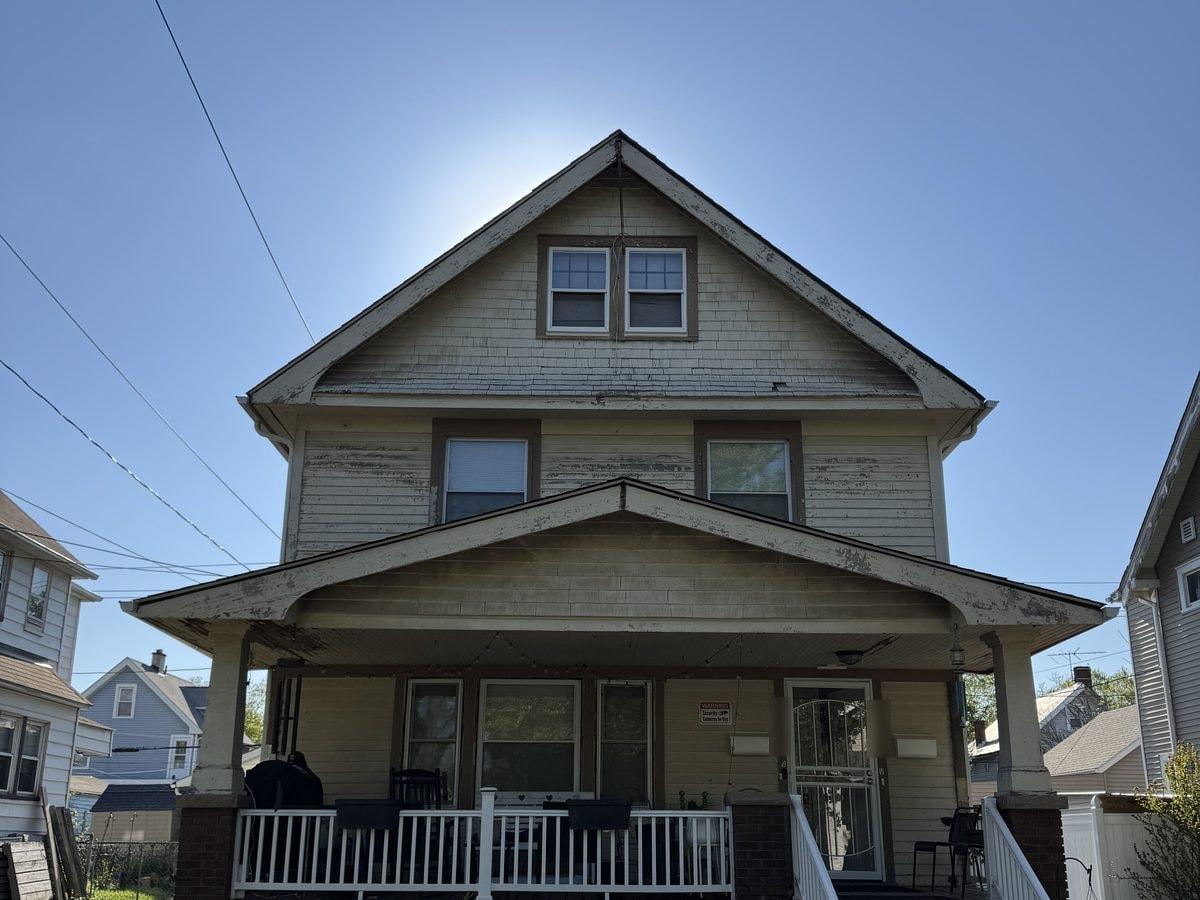
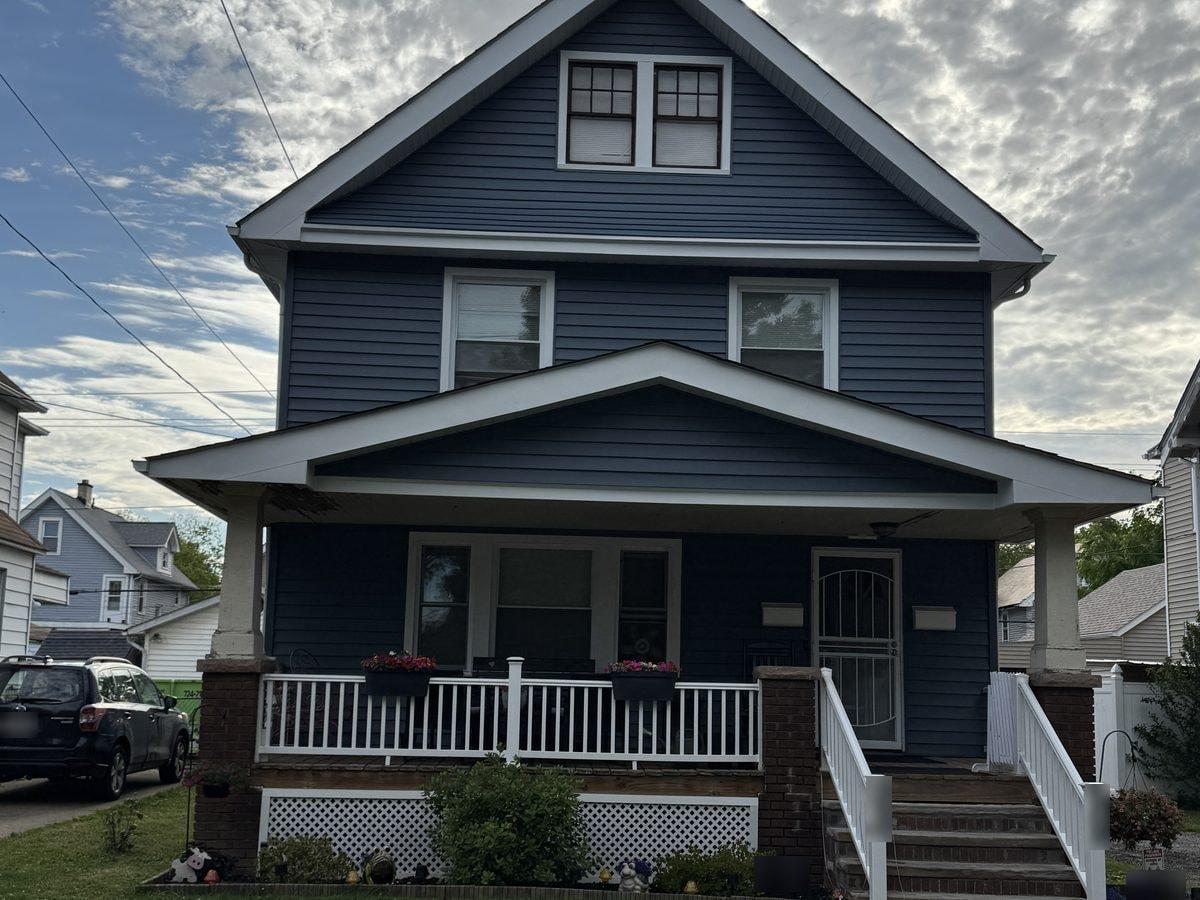
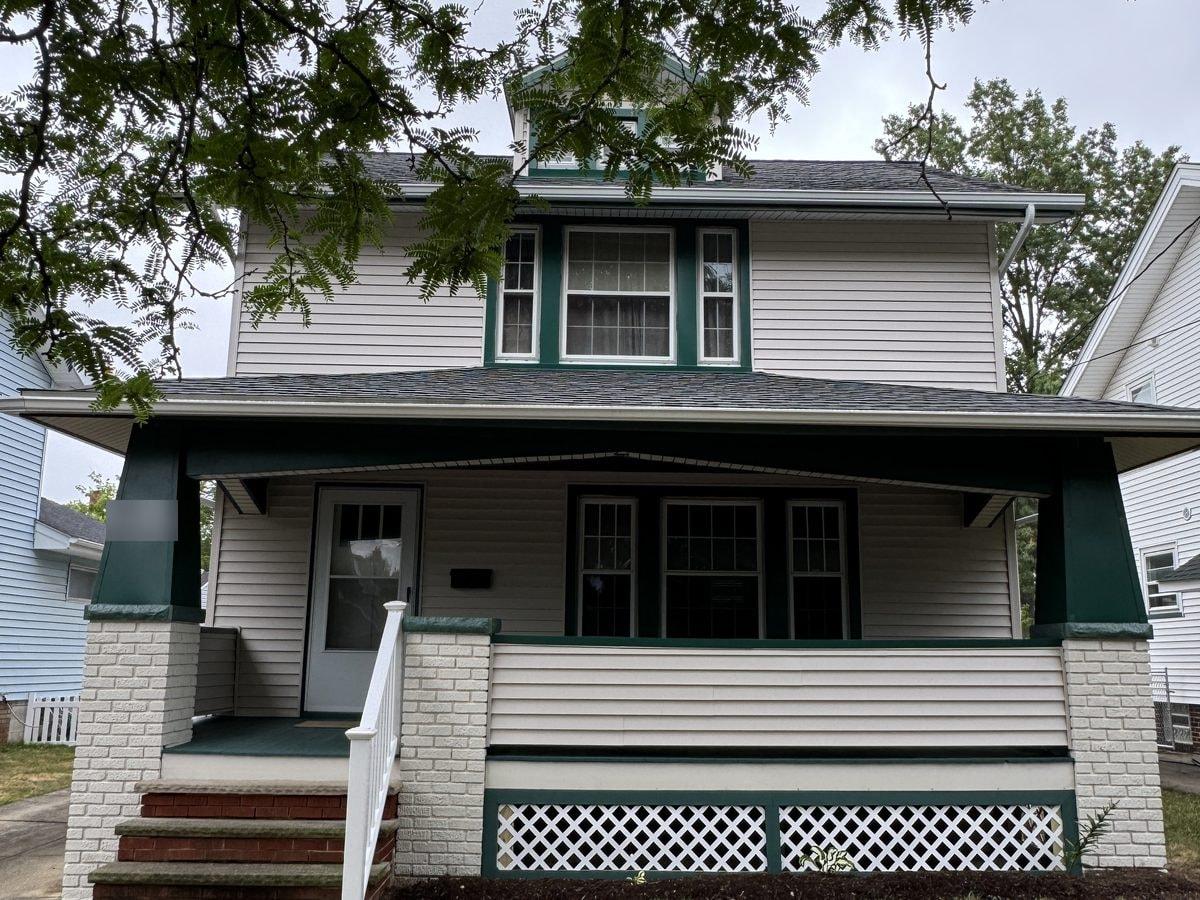
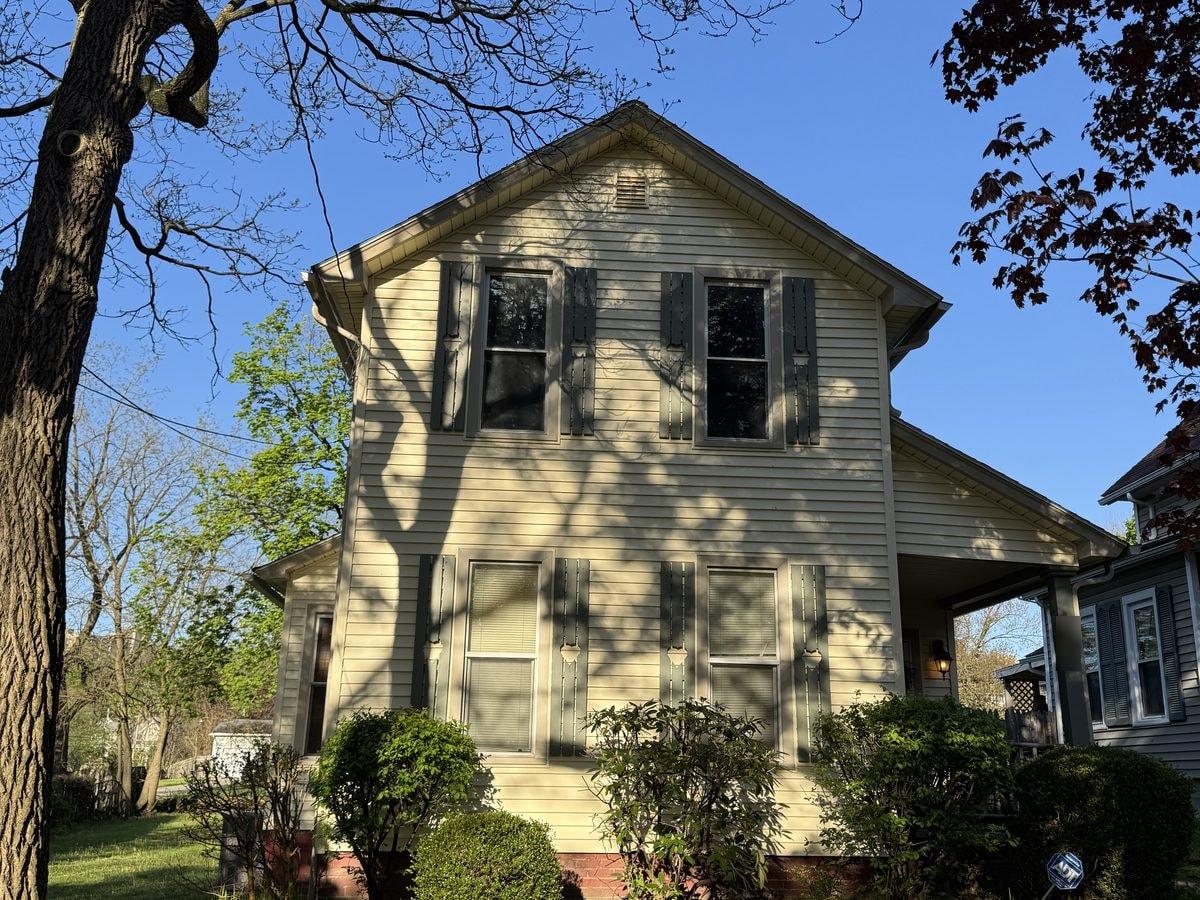
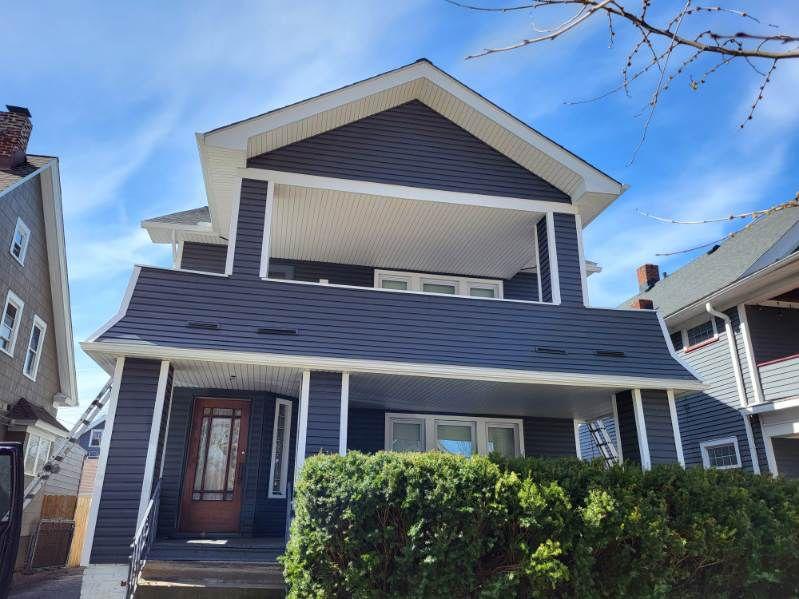
A few completed Buckeye projects show different approaches. On a Cleveland double in the West Boulevard neighborhood, blue vinyl siding with white window trim and wrapped fascia gives a high-contrast look. On a Lakewood front-porch colonial, the homeowner compared rendered options before choosing white siding with dark green trim and porch accents. In Akron, light beige vinyl with dark shutters and wrapped fascia kept an older farmhouse's traditional character. On a two-story house with upper and lower porches, dark blue-gray siding with crisp white trim gave the exterior more definition.
The project cards below show the finished results. They are examples of what worked on those houses, not rules; the same colors can look very different on a different house and roof.
Accents: gables, shutters, and doors
Accents are the low-risk place to add personality. A gable in vinyl shake in a slightly different shade, shutters in a deep color, or a painted front door can carry a bolder color without committing the whole house to it. Cleveland's Landmarks Commission notes that shingles can be used as an accent on houses where they fit the style.[2] See vinyl lap siding vs vinyl shake for how accents are installed.
Historic districts and landmarks
If your house is a designated Cleveland landmark or in a local historic district, exterior changes, including siding, need a Certificate of Appropriateness from the Landmarks Commission.[4] The Commission's siding guidelines say standard vinyl clapboard, shingle, and Dutch lap are not typically appropriate on primary facades, and favor wood, fiber cement, or some composites there.[2] Check early, before choosing materials or colors.
Testing colors before you commit
Small chips mislead. Colors look lighter and brighter on a full wall in sunlight, and they shift between morning and afternoon and from the sunny side to the shady side of the house. Look at full-size samples outside at different times of day, next to the brick and roof. Drive past houses with similar colors to see them at a distance.
A rendering of your own house is the fastest way to compare options side by side. Buckeye Exteriors offers free design renderings before you commit, so you can see body, trim, and accent combinations on a photo of your home. Since factory colors can change slightly over time,[3] it also helps to ask the installer to keep a few leftover panels for future repairs.
Real Buckeye projects
Work we have finished on homes like this
Vinyl Siding & Fascia
Blue & White Curb Appeal Makeover
West Boulevard, Cleveland
Worn siding on an older Cleveland house replaced with blue vinyl siding and white aluminum fascia and window trim.
See the project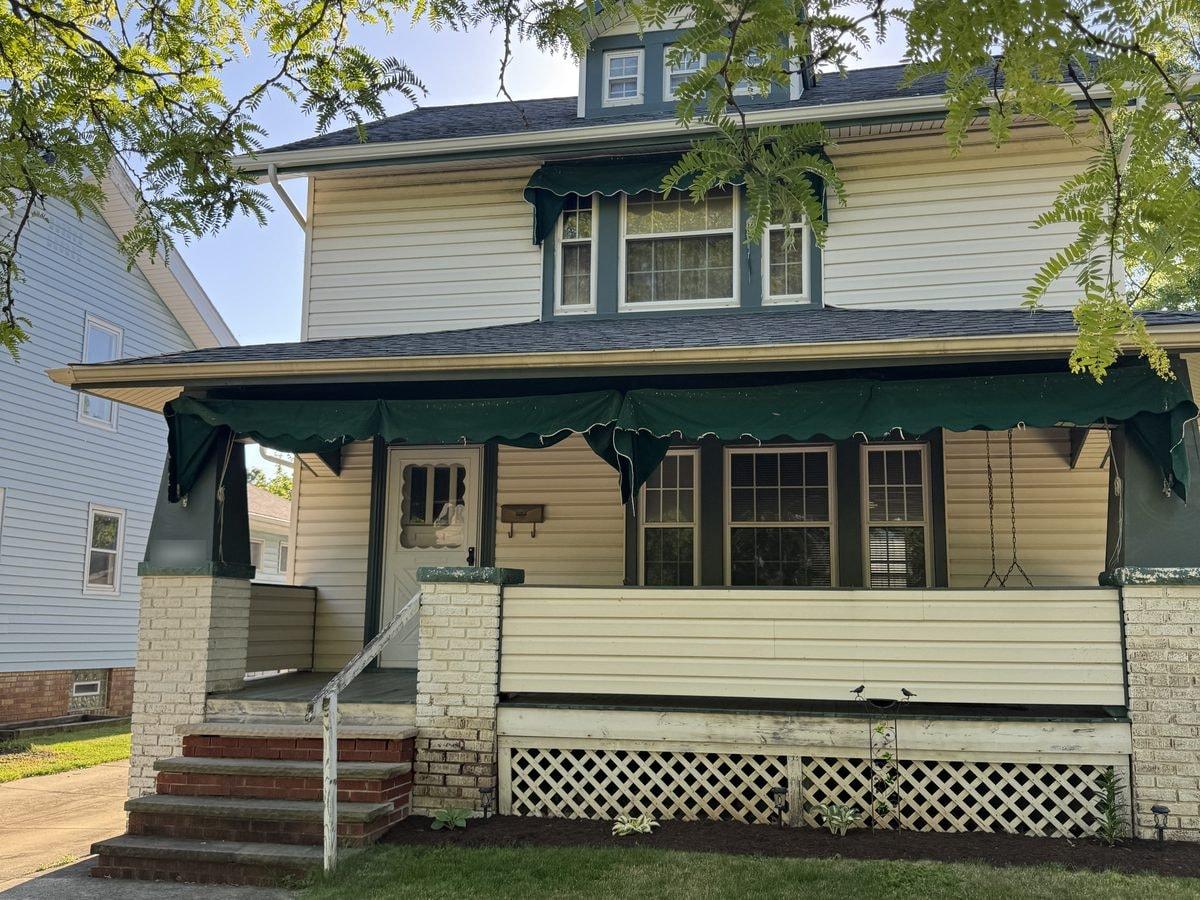
Siding & Design
AI-Rendered Siding Design
Lakewood
The homeowner compared rendered design options before choosing white siding with dark green trim and porch accents.
See the project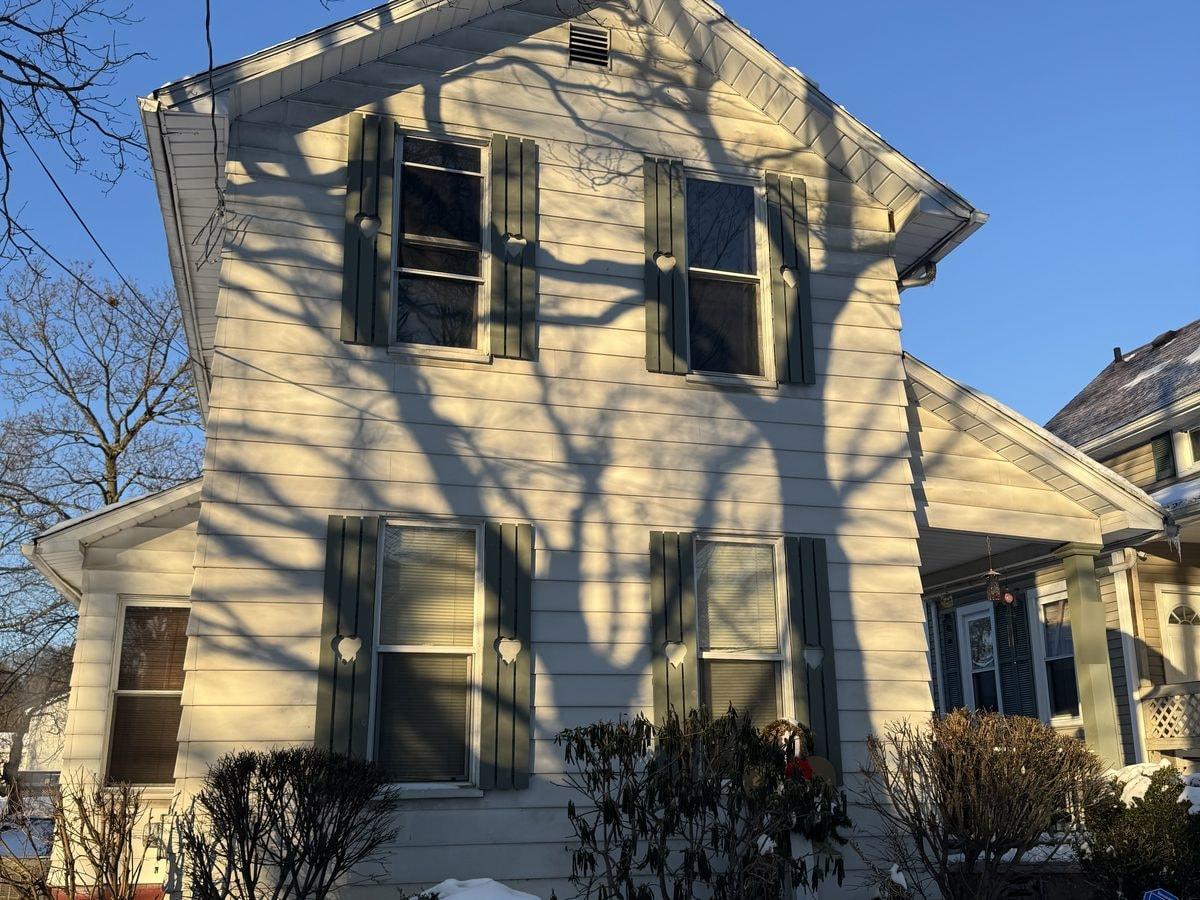
Vinyl Siding & Fascia
Traditional-Style Vinyl Siding Refresh
Akron
New light vinyl siding and wrapped fascia on an older Akron house, keeping its traditional look.
See the project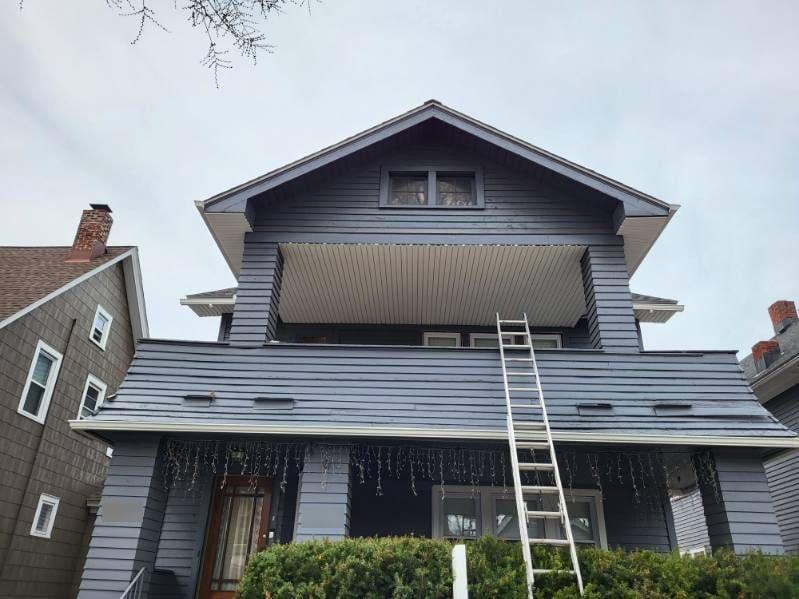
Siding & Trim
Modern Siding Upgrade
New dark siding with crisp white trim, chosen together with the homeowner to sharpen the house's lines.
See the projectRelated services
Where Buckeye can help
Siding Design Studio
See your home with new siding.
Upload a photo of your house and try siding colors and trim combinations before you decide. Results are design concepts, not exact renderings.
Sources
- 1.American Community Survey 2020–2024 5-year estimates: year structure built, U.S. Census Bureau. Accessed Nov 17, 2026.Survey estimates with margins of error; year built is reported by respondents.
- 2.Residential Siding and Exterior Elements Guide, Cleveland Landmarks Commission. Accessed Nov 17, 2026.
- 3.Preservation Brief 8: Aluminum and Vinyl Siding on Historic Buildings, National Park Service, Technical Preservation Services. Accessed Nov 17, 2026.
- 4.Landmarks Design Review, City of Cleveland. Accessed Nov 17, 2026.