Skip to content

Compare siding

Siding materials compared

Vinyl has the lowest installed cost and never needs paint[4]. Fiber cement has the longest lifespan range in the cost guides, 50 years or more, but costs more and has to be painted[2][1]. Wood needs the most upkeep[1]. Buckeye installs vinyl siding and vinyl shake.

Every figure below links to its source. Cost ranges are national averages.

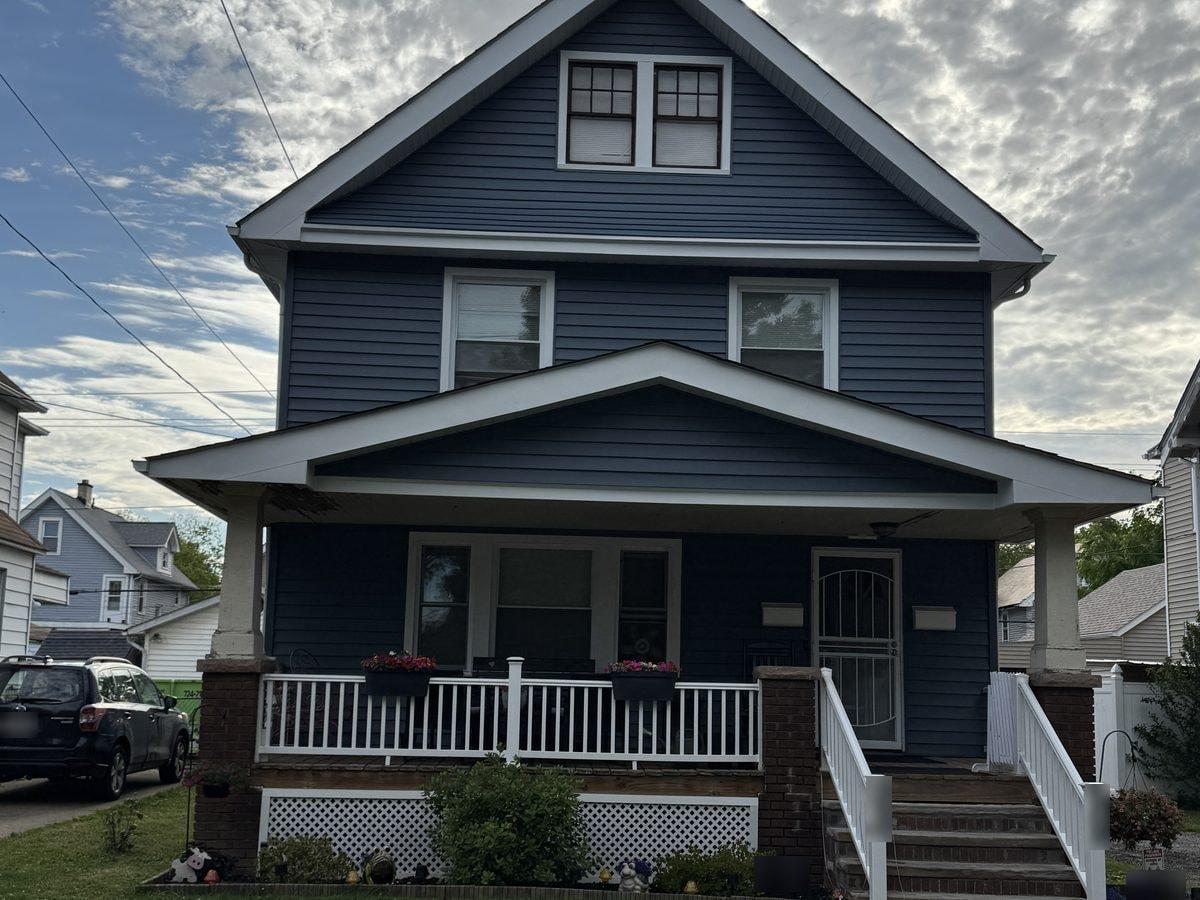
Blue vinyl siding with white trim installed by Buckeye Exteriors on a Cleveland home

Side by side

Compare two or three materials

The table starts with standard vinyl, insulated vinyl, and fiber cement. Swap in the materials you are deciding between.

Pick two or three materials to compare

Three selected. Remove one to swap in another.

Side-by-side comparison of Vinyl siding (standard), Insulated vinyl siding, Fiber cement
MaterialVinyl siding (standard)PVC lap or Dutch lap panels. The industry association says vinyl has the lowest installed cost of any exterior cladding.Insulated vinyl sidingVinyl panels with rigid foam permanently attached to the back. Stiffer on the wall and adds continuous insulation.Fiber cementPlanks and shingles made from cement, sand, and cellulose fiber (James Hardie is the best-known brand). Heavy, painted, and long-lived.
BuckeyeBuckeye installs thisBuckeye installs thisBuckeye installs vinyl siding; ask which insulated product lines are available.Not offered by Buckeye
Typical lifespan20–40 years (This Old House) or 30–40 years (HomeGuide). The industry's environmental product declaration assumes a 50-year service life, based on manufacturer warranties of 50 years or more.[1][2][3]Same outer vinyl panel as standard siding (see above). Fixr says insulated vinyl lasts the longest of the vinyl options; none of our sources publishes a separate year range.[8]50+ years (This Old House) or 50–75 years (HomeGuide).[1][2]
MaintenanceNo painting. Rinse with a garden hose or wash with a soft car-wash brush and household cleaner; avoid stiff brushes and abrasive cleaners, which change the gloss.[4][5]Same as standard vinyl: no painting, periodic washing with a soft brush.[4][5]Painted product. James Hardie recommends a hose-down every 6 to 12 months and warns that acid and high-pressure washing can damage it. Its factory ColorPlus finish carries a 15-year limited warranty against peeling, cracking, and chipping; primed boards need field paint.[11][12]
Freeze-thaw & moistureThe industry association says vinyl has no risk of rotting, swelling, or warping, but it expands and contracts with temperature, so panels must be hung loose enough to move. Cost guides note it can crack in extreme cold.[4][5][1][6]Certified insulated vinyl must provide at least R-2.0 and counts as continuous insulation under the International Energy Conservation Code. The foam backing also supports the panel against the wall.[9][4]James Hardie sells an HZ5 line it says is engineered for freezing temperatures, seasonal temperature swings, snow, and ice, with a drip edge for water management.[13]
Impact & hailIn Haag Engineering's lab test, new vinyl panels first fractured at the laps from ice balls ¾ to 1¼ inches across, depending on thickness and profile. Larger hail cracked or punctured them.[7]Certified products are tested for impact resistance under ASTM D7793. In Haag's lab test, the one foam-backed panel tested (0.044 in.) fractured at the smallest ice ball size, ¾ inch, so backing alone does not guarantee better hail performance.[4][7]James Hardie says its plank siding resists hail damage. We did not find an independent published hail threshold for fiber cement comparable to the vinyl and aluminum tests.[12]
Color optionsThe industry association says vinyl is sold in more than 400 styles and colors. HomeGuide notes the color can fade with direct sun exposure.[4][6]Color and profile choices vary by product line; ask for the current color chart for the specific product.James Hardie lists nearly 700 ColorPlus factory finishes, with availability varying by region, or any color when field painted.[12]
Installed cost (national)

$4–$7 per sq ft installed (HomeGuide)[6]

$4–$7 per sq ft installed (Fixr)[8]

Clapboard (traditional lap) and standard residential grade.

$6–$12 per sq ft installed (HomeGuide)[6]

$7–$12 per sq ft installed (Fixr)[8]

$6–$15 per sq ft installed (HomeGuide)[2]

$5–$14 per sq ft installed (HomeAdvisor)[10]

Pros
  • Lowest installed cost of any cladding, per the industry association[4]
  • Never needs paint[4]
  • Will not rot or attract insects[4][6]
  • Adds at least R-2.0 of continuous insulation[9]
  • Foam backing supports the panel against the wall[4]
  • No painting[4]
  • Longest lifespan range of the materials compared here[2][1]
  • Fire-resistant, looks like painted wood[1]
Cons
  • Can crack from hard impacts and in extreme cold[7][6]
  • Can fade in direct sun[6][1]
  • Older faded panels can be hard to match for repairs[2]
  • Costs more than standard vinyl[6][8]
  • Foam backing did not improve hail resistance in the one lab test we found[7]
  • Heavy and requires professional installation[1]
  • Needs paint upkeep unless factory-finished[12]
  • Costs more than vinyl[2]

Material by material

All seven materials in detail

Vinyl siding (standard)

Buckeye installs this

PVC lap or Dutch lap panels. The industry association says vinyl has the lowest installed cost of any exterior cladding.

Typical lifespan
20–40 years (This Old House) or 30–40 years (HomeGuide). The industry's environmental product declaration assumes a 50-year service life, based on manufacturer warranties of 50 years or more.[1][2][3]
Maintenance
No painting. Rinse with a garden hose or wash with a soft car-wash brush and household cleaner; avoid stiff brushes and abrasive cleaners, which change the gloss.[4][5]
Freeze-thaw & moisture
The industry association says vinyl has no risk of rotting, swelling, or warping, but it expands and contracts with temperature, so panels must be hung loose enough to move. Cost guides note it can crack in extreme cold.[4][5][1][6]
Impact & hail
In Haag Engineering's lab test, new vinyl panels first fractured at the laps from ice balls ¾ to 1¼ inches across, depending on thickness and profile. Larger hail cracked or punctured them.[7]
Color options
The industry association says vinyl is sold in more than 400 styles and colors. HomeGuide notes the color can fade with direct sun exposure.[4][6]
Installed cost (national ranges)

$4–$7 per sq ft installed (HomeGuide)[6]

$4–$7 per sq ft installed (Fixr)[8]

Clapboard (traditional lap) and standard residential grade.

Pros

  • Lowest installed cost of any cladding, per the industry association[4]
  • Never needs paint[4]
  • Will not rot or attract insects[4][6]

Cons

  • Can crack from hard impacts and in extreme cold[7][6]
  • Can fade in direct sun[6][1]
  • Older faded panels can be hard to match for repairs[2]
Read Buckeye's vinyl siding page

Insulated vinyl siding

Buckeye installs this

Vinyl panels with rigid foam permanently attached to the back. Stiffer on the wall and adds continuous insulation.

Typical lifespan
Same outer vinyl panel as standard siding (see above). Fixr says insulated vinyl lasts the longest of the vinyl options; none of our sources publishes a separate year range.[8]
Maintenance
Same as standard vinyl: no painting, periodic washing with a soft brush.[4][5]
Freeze-thaw & moisture
Certified insulated vinyl must provide at least R-2.0 and counts as continuous insulation under the International Energy Conservation Code. The foam backing also supports the panel against the wall.[9][4]
Impact & hail
Certified products are tested for impact resistance under ASTM D7793. In Haag's lab test, the one foam-backed panel tested (0.044 in.) fractured at the smallest ice ball size, ¾ inch, so backing alone does not guarantee better hail performance.[4][7]
Color options
Color and profile choices vary by product line; ask for the current color chart for the specific product.
Installed cost (national ranges)

$6–$12 per sq ft installed (HomeGuide)[6]

$7–$12 per sq ft installed (Fixr)[8]

Pros

  • Adds at least R-2.0 of continuous insulation[9]
  • Foam backing supports the panel against the wall[4]
  • No painting[4]

Cons

  • Costs more than standard vinyl[6][8]
  • Foam backing did not improve hail resistance in the one lab test we found[7]

Vinyl shake & scallop

Buckeye installs this

Molded panels that imitate cedar shakes or scalloped shingles, often used to highlight gables, dormers, and other features alongside lap siding.

Typical lifespan
None of our sources publishes a separate lifespan for shake panels. Ask for the warranty on the specific product, and whether it is vinyl or polypropylene, since both are sold as shake siding.[4]
Maintenance
No painting; wash like other vinyl with a hose or a soft brush.[4][5]
Freeze-thaw & moisture
Same polymer behavior as vinyl lap siding: no rot or swelling, and it must be installed to allow movement with temperature.[4][5]
Impact & hail
We found no published hail test for shake panels. Ask the manufacturer for the product's ASTM certification.
Color options
Embossed wood grain that mimics natural shakes or shingles. Colors vary by product line.[6]
Installed cost (national ranges)

$4–$10 per sq ft installed (HomeGuide)[6]

$3–$10 per sq ft installed (Fixr)[8]

HomeGuide prices cedar shakes at $7–$16 per sq ft installed for comparison.

Pros

  • Cedar-shake look without staining or sealing[6]
  • Often used as an accent on specific parts of the house[6]

Cons

  • Costs more per square foot than plain vinyl lap[6]
  • Product lifespan and hail data vary by manufacturer
Read Buckeye's vinyl shake & scallop page

Aluminum siding

Ask at your estimate

Painted aluminum lap panels. Lightweight metal that dents rather than cracks.

Typical lifespan
20–40 years (This Old House) or 25–40 years (HomeGuide).[1][2]
Maintenance
Can be repainted. HomeGuide says paint finishes on most siding last 10–15 years before fading or flaking, and lists repainting aluminum or metal siding at $1–$4 per sq ft.[2]
Freeze-thaw & moisture
Does not rot and is insect-proof; the drawbacks the cost guides list are denting and corrosion.[1][2]
Impact & hail
In Haag's lab test, ¾-inch ice balls dented both 19- and 24-gauge aluminum. The metal never cracked or punctured, but 1½-inch and larger ice balls chipped the paint and badly buckled the panels.[7]
Color options
Painted finishes; options depend on what manufacturers currently stock. Ask for current colors before planning a repair match.
Installed cost (national ranges)

$6–$10 per sq ft installed (HomeGuide)[2]

$3–$6 per sq ft installed (HomeAdvisor)[10]

The two guides disagree; treat aluminum pricing as uncertain.

Pros

  • Fire-resistant and insect-proof[1][2]
  • Did not crack or puncture in lab hail tests (it dents instead)[7]

Cons

  • Dents easily, including from small hail[1][7]
  • Can corrode[1]
  • Less energy efficient than vinyl or steel, per HomeGuide[2]

Fiber cement

Not offered by Buckeye

Planks and shingles made from cement, sand, and cellulose fiber (James Hardie is the best-known brand). Heavy, painted, and long-lived.

Typical lifespan
50+ years (This Old House) or 50–75 years (HomeGuide).[1][2]
Maintenance
Painted product. James Hardie recommends a hose-down every 6 to 12 months and warns that acid and high-pressure washing can damage it. Its factory ColorPlus finish carries a 15-year limited warranty against peeling, cracking, and chipping; primed boards need field paint.[11][12]
Freeze-thaw & moisture
James Hardie sells an HZ5 line it says is engineered for freezing temperatures, seasonal temperature swings, snow, and ice, with a drip edge for water management.[13]
Impact & hail
James Hardie says its plank siding resists hail damage. We did not find an independent published hail threshold for fiber cement comparable to the vinyl and aluminum tests.[12]
Color options
James Hardie lists nearly 700 ColorPlus factory finishes, with availability varying by region, or any color when field painted.[12]
Installed cost (national ranges)

$6–$15 per sq ft installed (HomeGuide)[2]

$5–$14 per sq ft installed (HomeAdvisor)[10]

Pros

  • Longest lifespan range of the materials compared here[2][1]
  • Fire-resistant, looks like painted wood[1]

Cons

  • Heavy and requires professional installation[1]
  • Needs paint upkeep unless factory-finished[12]
  • Costs more than vinyl[2]

Engineered wood

Not offered by Buckeye

Wood strands and resin pressed into lap boards and panels (LP SmartSide is the best-known brand). Painted, lighter than fiber cement.

Typical lifespan
30–50 years (HomeGuide).[2]
Maintenance
LP calls for a yearly inspection: repaint before the existing paint fails, replace cracked caulk, keep 6 inches of clearance to the ground, and never use a pressure washer.[14]
Freeze-thaw & moisture
LP says its treated substrate resists water and is therefore less subject to freeze-thaw damage. Exposed cuts must be sealed and the paint maintained to keep water out.[15][14]
Impact & hail
LP's limited warranty covers hail damage from hail up to 1.75 inches in diameter, with conditions, including filing a homeowner's insurance claim first.[15]
Color options
LP lists 16 ExpertFinish factory colors, or primed boards painted any color on site.[15]
Installed cost (national ranges)

$7–$12 per sq ft installed (HomeGuide)[2]

HomeAdvisor's $1–$6 figure was left out because it is far below every other guide and likely excludes part of the job.

Pros

  • Wood look with a manufacturer hail warranty[15]
  • Factory finish or paint any color[15]

Cons

  • Paint and caulk must be maintained to keep water out[14]
  • Costs more than vinyl[2]

Wood (cedar, pine, and other species)

Not offered by Buckeye

Solid wood clapboard, shingles, shakes, or board and batten in cedar, pine, fir, and other species.

Typical lifespan
20–40 years for cedar (This Old House, HomeGuide); HomeGuide gives 20–40+ years for real wood siding in general. Life depends heavily on keeping it painted.[1][2]
Maintenance
The most upkeep of any option here. A This Old House carpenter notes cedar clapboards may need repainting every 7–10 years, with some sanding.[1]
Freeze-thaw & moisture
The USDA Forest Products Laboratory says moisture buildup and swings cause checking, warping, paint failure, and in severe cases rot. Flashing, roof overhangs, and ground clearance all matter.[16]
Impact & hail
None of our sources publishes hail data for wood siding.
Color options
Any paint or stain color. The Forest Products Lab found paint life depends on priming wood before it sits in the sun.[16]
Installed cost (national ranges)

$5–$15 per sq ft installed (HomeGuide)[2]

HomeGuide prices cedar clapboard at $6–$12 per sq ft installed.

Pros

  • Natural look[1]
  • Can be painted or stained any color[16]

Cons

  • Regular repainting and sealing[1]
  • Susceptible to moisture, rot, and insects if not maintained[2][16]

How to read the cost ranges

The ranges come from national cost guides and are shown per square foot of wall, installed. Where two guides publish different ranges for the same material, both are shown. They do not include tearing off old siding, which HomeGuide lists separately at $0.70 to $2.00 per square foot[2], or replacing rotted sheathing found once the old siding is off.

For a planning number for your own house, measure the walls and use the guides as a range. Our siding cost calculator does the math for you.

Siding material questions

Which siding holds up best to Cleveland's freeze-thaw winters?

No material is immune. Vinyl won't rot or swell but has to be hung loose enough to move with temperature, and it can crack from hard impacts in the cold. Fiber cement and engineered wood makers sell products they say are built for freeze-thaw, but both depend on paint and sealed cuts to keep water out. Wood is the most sensitive to moisture. Flashing, house wrap, and ground clearance matter as much as the material.

Does Buckeye install fiber cement, Hardie, or wood siding?

No. Buckeye installs vinyl siding and vinyl shake, along with aluminum fascia and trim wrap. Fiber cement, engineered wood, and wood are here so you can compare them. Ask about aluminum siding at your estimate.

Is insulated vinyl siding worth the extra cost?

Certified insulated vinyl adds at least R-2.0 of continuous insulation and costs more per square foot than standard vinyl. It makes the most sense on walls with little insulation now. Ask for the rated R-value of the specific product, since it varies by line.

Are these prices what Buckeye charges?

No. They are national installed-cost ranges published by HomeGuide, Fixr, and HomeAdvisor. Your price depends on wall area, stories, trim, tear-off, and repairs to the wood underneath. Buckeye prices a job after measuring and inspecting the house.

Plan your budget

Estimate your siding cost.

Get a planning range from your home's size, stories, and material. No contact information required to see a result.

Sources

  1. 1.Siding Replacement Cost (2026 Pricing), This Old House Reviews (Jun 12, 2026). Accessed Nov 17, 2026.Cost data sourced from Homewyse national averages; lifespan and maintenance notes.
  2. 2.How Much Does House Siding Cost to Install or Replace? (2026), HomeGuide (Oct 29, 2025). Accessed Nov 17, 2026.National installed-cost ranges and lifespan table.
  3. 3.Environmental Product Declaration: Vinyl Siding, Vinyl Siding Institute / Polymeric Exterior Products Association (2025). Accessed Nov 17, 2026.
  4. 4.Polymeric Siding and Vinyl Siding Options, Polymeric Exterior Products Association (formerly the Vinyl Siding Institute). Accessed Nov 17, 2026.
  5. 5.Vinyl Siding Installation Manual: Important Notes and Cleaning, Polymeric Exterior Products Association. Accessed Nov 17, 2026.
  6. 6.How Much Does Vinyl Siding Cost? (2026), HomeGuide (Jan 28, 2025). Accessed Nov 17, 2026.
  7. 7.Ice Ball Impact Testing of Siding, Haag Engineering, presented at the RCI International Convention (IIBEC) (2012). Accessed Nov 17, 2026.Laboratory test of new, unweathered vinyl, aluminum, and steel siding with freezer ice balls.
  8. 8.How Much Does Vinyl Siding Cost? [2026 Data], Fixr (Jan 28, 2026). Accessed Nov 17, 2026.
  9. 9.Vinyl Siding Installation Manual (2022), Polymeric Exterior Products Association (2022). Accessed Nov 17, 2026.
  10. 10.How Much Does It Cost to Replace Siding on a House in 2026?, HomeAdvisor (Angi Inc.) (Jun 20, 2026). Accessed Nov 17, 2026.
  11. 11.ColorPlus Technology Finish Limited Warranty and care instructions, James Hardie (Feb 2024). Accessed Nov 17, 2026.
  12. 12.Frequently Asked Questions, James Hardie. Accessed Nov 17, 2026.Manufacturer statement.
  13. 13.The Hardie Zone System, James Hardie. Accessed Nov 17, 2026.Manufacturer statement.
  14. 14.LP SmartSide Care and Maintenance Instructions, LP Building Solutions. Accessed Nov 17, 2026.
  15. 15.LP SmartSide 2026 Product Catalog, LP Building Solutions (2026). Accessed Nov 17, 2026.Manufacturer statement.
  16. 16.Before You Install Exterior Wood-Based Siding, USDA Forest Service, Forest Products Laboratory (2013). Accessed Nov 17, 2026.
Call nowFree estimate